Joan
A reliable modern swede with good-sized, round roots and steady autumn cropping.
Brassica napus subsp. napobrassica
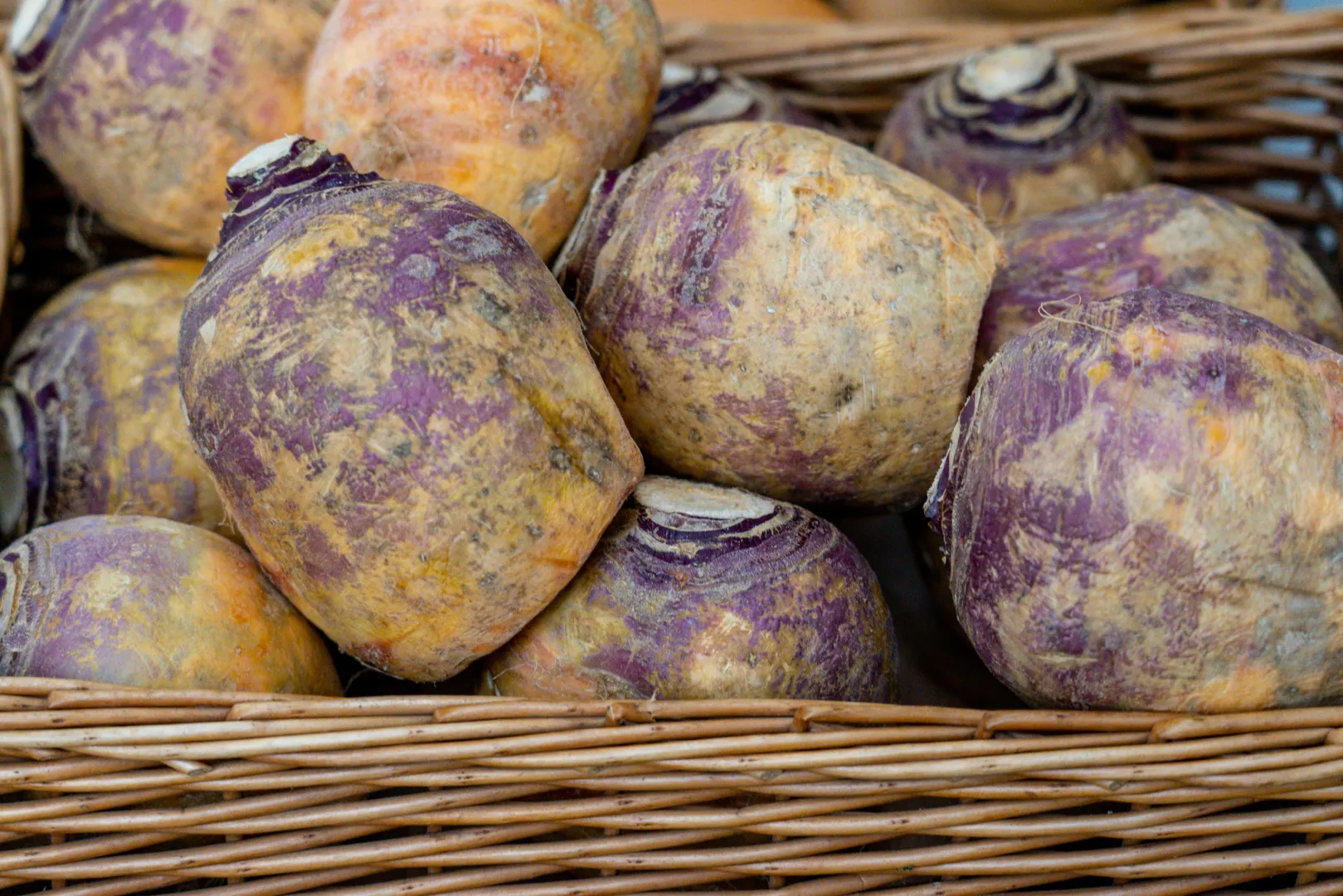
A hardy root crop for the UK, swedes do best in firm, fertile soil that has been well dug and cleared of stones. Sow outdoors in late spring to early summer, thin carefully, and keep the plants covered with fine mesh to reduce cabbage root fly damage. Lift roots from autumn onwards, and leave some in the ground where the soil drains well for harvests through winter.
40 cm · Full Sun · Moderate Water
| Activity | January | February | March | April | May | June | July | August | September | October | November | December |
|---|---|---|---|---|---|---|---|---|---|---|---|---|
| Sow outdoors | No | No | No | No | Yes | Yes | No | No | No | No | No | No |
| Harvest | Yes | Yes | No | No | No | No | No | No | No | Yes | Yes | Yes |
UK averages · set your town for dates worked out from your local frost records · how dates are worked out
What to do through the growing season
01
Dig the soil deeply and remove stones, then rake it to a fine, even finish for early May to mid-May. Do not add fresh manure, as it can make roots fork and split.
02
Sow seeds thinly in shallow drills around late May to late June, then water the row in well. Keep the soil moist while seedlings establish, and sow a second short row 21 days later if you want a longer harvest period.
03
Cover the bed with fine insect-proof mesh from late May straight after sowing. Seal the edges well to keep out cabbage root fly and remove the cover only for weeding or thinning.
04
From late June to mid-July, thin seedlings gradually to the final spacing so the roots can swell properly. Water the bed first, then remove the weakest plants with a small pull rather than disturbing the rest.
05
From late June to late October, keep the bed evenly moist in dry spells and hoe off weeds before they compete with the crop. Check the mesh stays tight after rain and wind, and water at the base rather than over the foliage.
06
Lift roots from early October once they are a good size, then keep harvesting through mid-February. In light, free-draining soil you can leave some in the ground and take them as needed, but lift them before the roots become coarse.
Popular varieties of Swede to consider
A reliable modern swede with good-sized, round roots and steady autumn cropping.
An old favourite with good flavour and dependable roots for the kitchen garden.
A hardy, well-fleshed variety suited to UK conditions and winter harvesting.
Explore similar plants you might like