Conference
The standard UK pear for reliable cropping and good flavour. It stores well and suits most gardens.
Pyrus communis
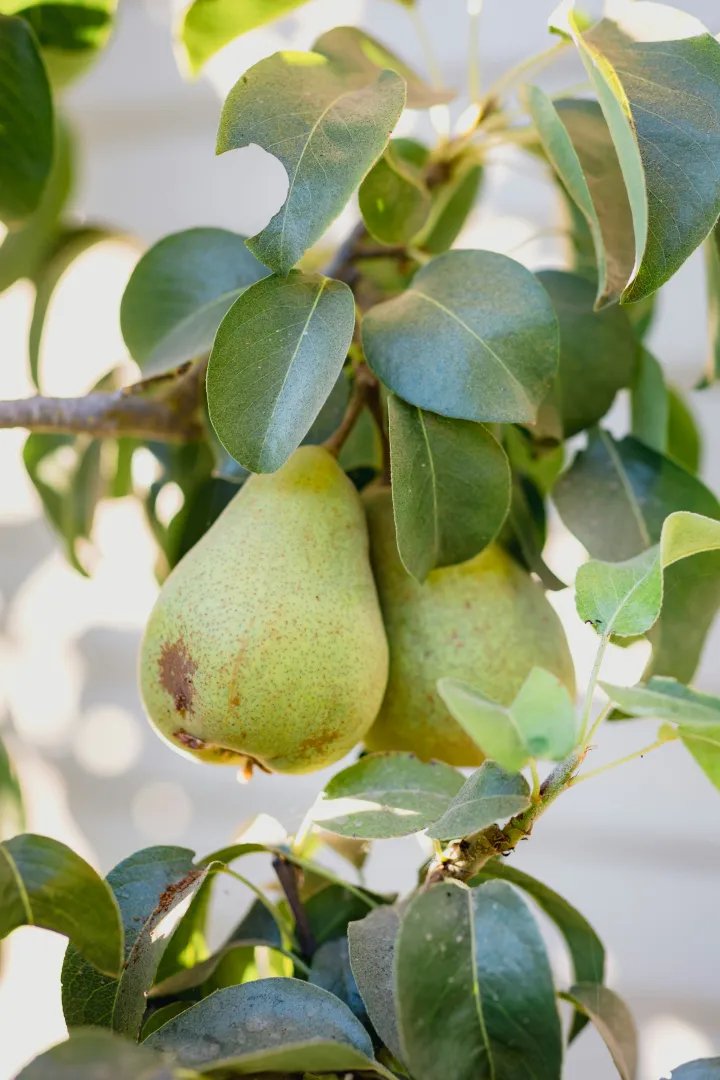
A hardy fruit tree for UK gardens, planted bare-root while dormant. It does best in full sun, in fertile, well-drained soil. Shelter from frost. The first crop comes after they settle.
600 cm · Full Sun · Moderate Water
| Activity | January | February | March | April | May | June | July | August | September | October | November | December |
|---|---|---|---|---|---|---|---|---|---|---|---|---|
| Plant out | Yes | Yes | No | No | No | No | No | No | No | No | Yes | Yes |
| Harvest | No | No | No | No | No | No | No | Yes | Yes | Yes | No | No |
UK averages · set your town for dates worked out from your local frost records · how dates are worked out
What to do through the growing season
Change the guide to see different planting timelines and tips.
Plant while dormant in a sheltered, sunny spot. A dwarfing rootstock in a pot is a separate route.
01
Plant the bare-root tree during mid-November to early February. Only plant if the ground is open, not frozen or wet. Set the graft union above the soil. Firm in. Stake it. Keep a weed-free circle around the base. Water in well. Start winter pruning at planting.
02
From mid-May to mid-October, water well for the first two years, then in dry spells while the fruit swells. Do this each year.
03
Around early March to early April, mulch with compost or well-rotted manure. Leave a gap around the trunk. Do this once a year. Feed only if growth is weak.
04
After the natural drop, during mid-June to early July, thin congested fruitlets. Leave two fruits per cluster on a free-standing tree, or one on trained forms.
05
Pick from early August to mid-October while the fruit is still firm. Lift and twist. Let them ripen indoors.
06
Prune around early February to early March, while the tree is dormant. Keep an open centre. Remove crossing shoots and dead wood.
Popular varieties of Pear to consider
The standard UK pear for reliable cropping and good flavour. It stores well and suits most gardens.
A well-known early pear with a juicy, aromatic flavour. Best eaten soon after picking.
A rich dessert pear with excellent flavour. It prefers a warm, sheltered site and can be a bit fussier than Conference.
A compact, modern dessert pear with a good flavour and reliable cropping. Often a sensible choice for smaller gardens.
Explore similar plants you might like