Alaska
A compact, variegated nasturtium with cream-mottled foliage and bright flowers. Good for edging and containers.
Tropaeolum majus
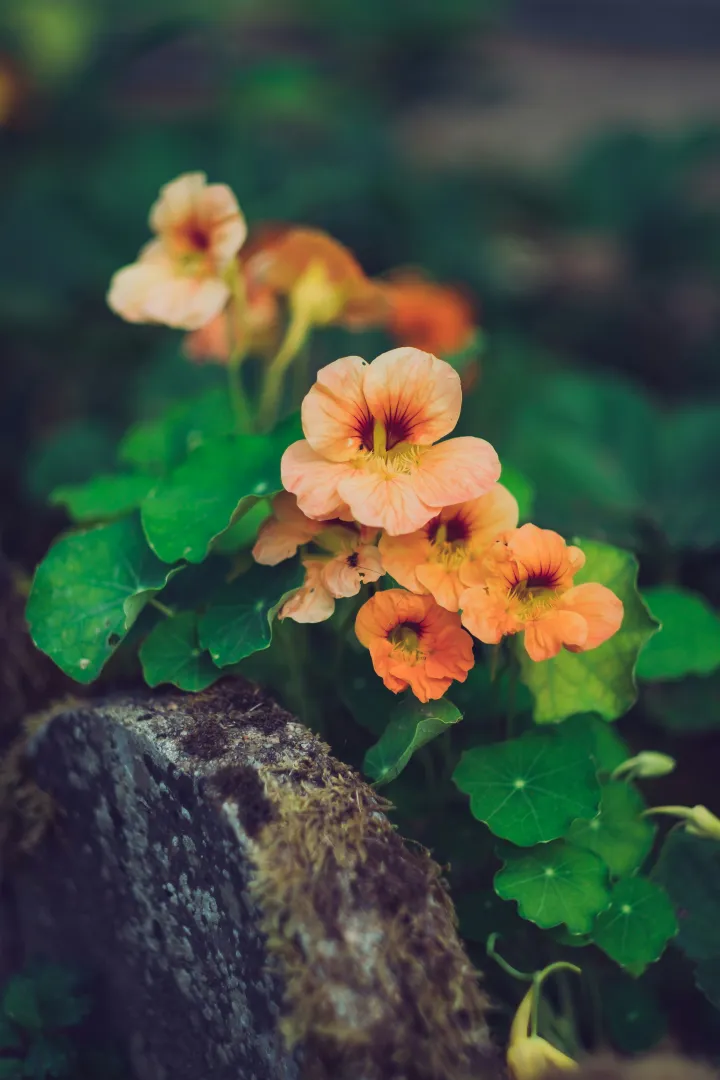
A fast-growing half-hardy annual with bright edible flowers and round leaves. In the UK it’s easy from seed, flowers well in poor soil, and suits beds, edging, hanging baskets, or larger containers.
30 cm · Full Sun · Low Water
| Activity | January | February | March | April | May | June | July | August | September | October | November | December |
|---|---|---|---|---|---|---|---|---|---|---|---|---|
| Sow indoors | No | No | No | Yes | No | No | No | No | No | No | No | No |
| Plant out | No | No | No | No | Yes | No | No | No | No | No | No | No |
| Harvest | No | No | No | No | No | Yes | Yes | Yes | Yes | Yes | No | No |
UK averages · set your town for dates worked out from your local frost records · how dates are worked out
What to do through the growing season
01
Sow seeds into individual modules around early April to mid-April. Cover with of compost and keep the compost just moist while seedlings emerge.
02
When seedlings have a couple of true leaves, from mid-April to mid-May, move them into individual pots if their modules are crowded. Handle them by the leaves, not the stems, and keep them in bright light so they do not become leggy.
03
From early May to late May, move plants outside for longer each day before planting them out. Protect them from cold nights and strong wind, and keep them in a sheltered spot at first.
04
Once the soil has warmed and frost risk has passed, plant out your hardened-off seedlings around mid-May to late May. Space them apart, water in thoroughly straight after planting, and give them a sunny spot with free-draining soil.
05
From mid-June to late October, remove fading flowers regularly so the plant keeps producing new blooms instead of setting seed. Water only in dry spells, because rich soil and heavy feeding usually mean more leaves and fewer flowers.
06
Pick flowers and young leaves from mid-June until late October. Harvest in the morning for the best flavour, and take only a few leaves from each plant so it keeps flowering well.
Popular varieties of Nasturtium to consider
A compact, variegated nasturtium with cream-mottled foliage and bright flowers. Good for edging and containers.
A dwarf, deep red-flowered type with neat growth. Useful for smaller beds and pots.
A mixed dwarf strain that flowers freely from summer into autumn. Handy for quick colour in beds and containers.
A semi-trailing mix with double flowers and a tidy habit. Suits baskets, tubs, and spilling over raised edges.
Explore similar plants you might like