Solent Wight
A softneck variety with a strong flavour, excellent for storing and well-suited to UK climates.
Allium sativum
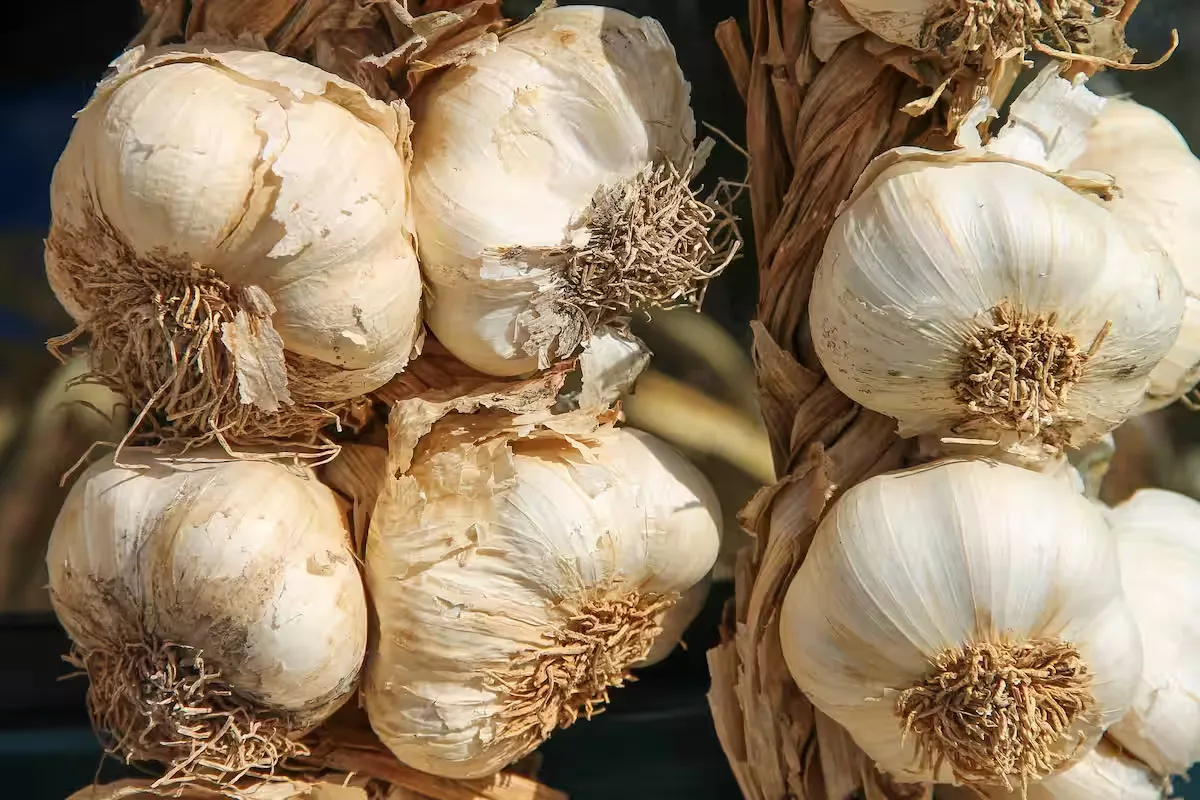
Hardy garlic for a sunny, well-drained UK bed. Plant garlic sold for planting in autumn so it gets a cold spell and makes bulbs the following summer. Choose named varieties sold as seed garlic rather than supermarket bulbs. Hardneck types make a flower stem called a scape. Snap it off when it appears. Softneck types rarely make scapes.
60 cm · Full Sun · Moderate Water
| Activity | January | February | March | April | May | June | July | August | September | October | November | December |
|---|---|---|---|---|---|---|---|---|---|---|---|---|
| Plant out | No | No | No | No | No | No | No | No | Yes | Yes | Yes | No |
| Harvest | No | No | No | No | Yes | Yes | Yes | Yes | No | No | No | No |
UK averages · set your town for dates worked out from your local frost records · how dates are worked out
What to do through the growing season
Change the guide to see different planting timelines and tips.
Plant garlic sold for planting in autumn so it roots over winter and makes larger bulbs. Choose named varieties sold as seed garlic rather than supermarket bulbs.
01
Work in well-rotted compost or manure around early September to late September, not fresh. The bed must drain well or cloves rot over winter. Rake to a fine tilth and take out weeds.
02
Use garlic sold for planting, not supermarket bulbs. Choose a named variety sold as seed garlic. Plant individual cloves around late September to early November, pointy end up, with of soil over the tip. Space them apart, in rows apart. Firm the soil. Shallow planting makes green cloves.
03
Mulch once after planting, around late September to mid-November, with straw or compost. That holds moisture and keeps weeds down. Garlic competes poorly with weeds, so keep pulling weeds as they show.
04
On hardneck types, snap scapes when they appear, around late March to early June. You can eat them. Softneck types almost never make scapes.
05
Lift bulbs through late May to early August, when the lower leaves yellow. Use a fork so you do not nick the bulbs.
06
Dry the bulbs in a well-ventilated, shaded spot for 2 to 4 weeks, from late May to late August. Keep them below . Trim roots and foliage once the skins are papery, then store somewhere cool and dry.
Tap a plant to see why it works (or doesn't) with Garlic.
Companion planting can deter pests, improve pollination, and make better use of space. Some plants confuse pests or attract beneficial insects; others improve soil or offer shade to neighbours that need it.
Popular varieties of Garlic to consider
A softneck variety with a strong flavour, excellent for storing and well-suited to UK climates.
A hardneck variety with purple-striped skin and a milder taste, ideal for autumn planting.
A softneck variety known for its large bulbs and good resistance to rust, suitable for spring planting.
Explore similar plants you might like