Sensation Mixed
Tall, open plants with large single flowers in mixed colours. A very common bedding and cutting strain in UK catalogues.
Cosmos bipinnatus
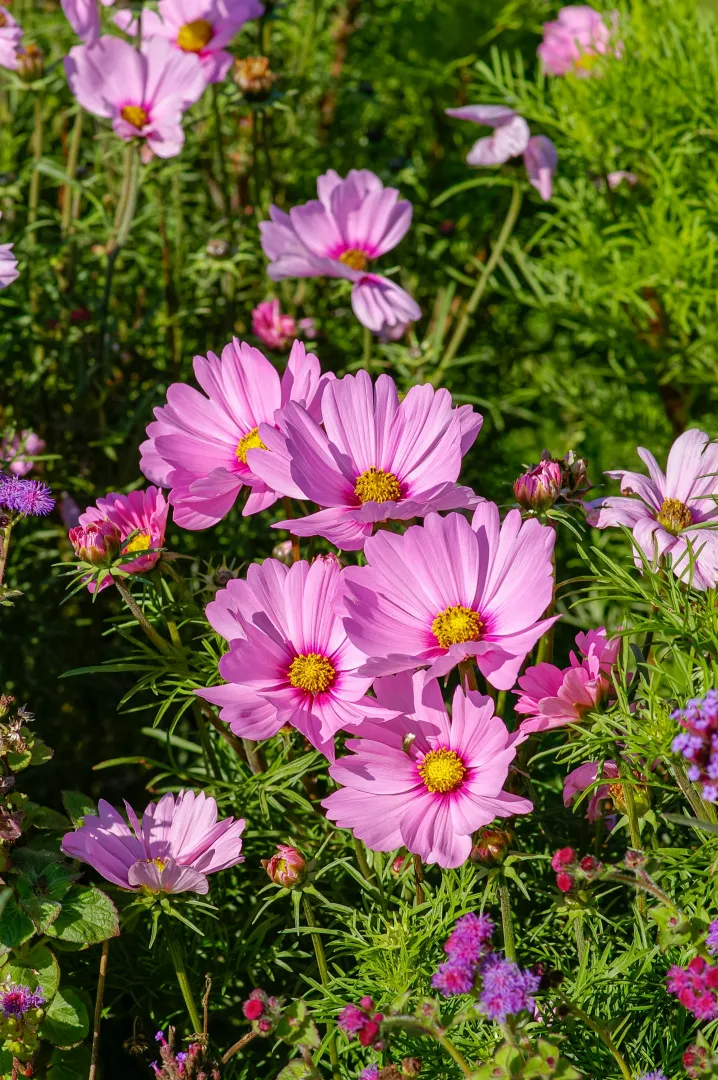
A half-hardy annual grown for long-lasting, daisy-like flowers. In the UK it does best in a sunny, sheltered spot with free-draining soil, and it flowers freely from summer into autumn if you keep it deadheaded.
90 cm · Full Sun · Moderate Water
| Activity | January | February | March | April | May | June | July | August | September | October | November | December |
|---|---|---|---|---|---|---|---|---|---|---|---|---|
| Sow indoors | No | No | Yes | Yes | No | No | No | No | No | No | No | No |
| Plant out | No | No | No | No | Yes | Yes | No | No | No | No | No | No |
UK averages · set your town for dates worked out from your local frost records · how dates are worked out
What to do through the growing season
01
Sow seeds in trays or modules from mid-March to mid-April, using of fine compost. Keep them at and just moist, not wet.
02
Move seedlings on when they are large enough to handle, from early April to early May. Pot them into small pots and keep them growing in a bright, frost-free place.
03
Acclimatise plants over 15 days before planting out, from early May to mid-May. Put them outside in the daytime at first, then leave them out for longer each day so they do not check in cold weather.
04
Plant into free-draining soil from mid-May to early June, spacing plants apart. Water in thoroughly straight after planting and protect young plants from slugs and late cold snaps if needed.
05
Remove fading flowers regularly from mid-June to late October. This stops the plant setting seed too early and keeps it producing flowers until the autumn frosts. Tie in taller stems if the plants get blown about, and water during dry spells.
Popular varieties of Cosmos to consider
Tall, open plants with large single flowers in mixed colours. A very common bedding and cutting strain in UK catalogues.
Tall white-flowered plants with good stems for cutting. Reliable in a sunny border.
Distinctive tubular petals and strong colour range. Good for a lighter, airy planting effect.
A shorter, compact type suited to pots and front-of-border planting. Useful where space is limited.
Explore similar plants you might like