Amsterdam Forcing 3
A slim early carrot for quick sowings and smaller roots. Good for a light soil and picking young.
Daucus carota subsp. sativus
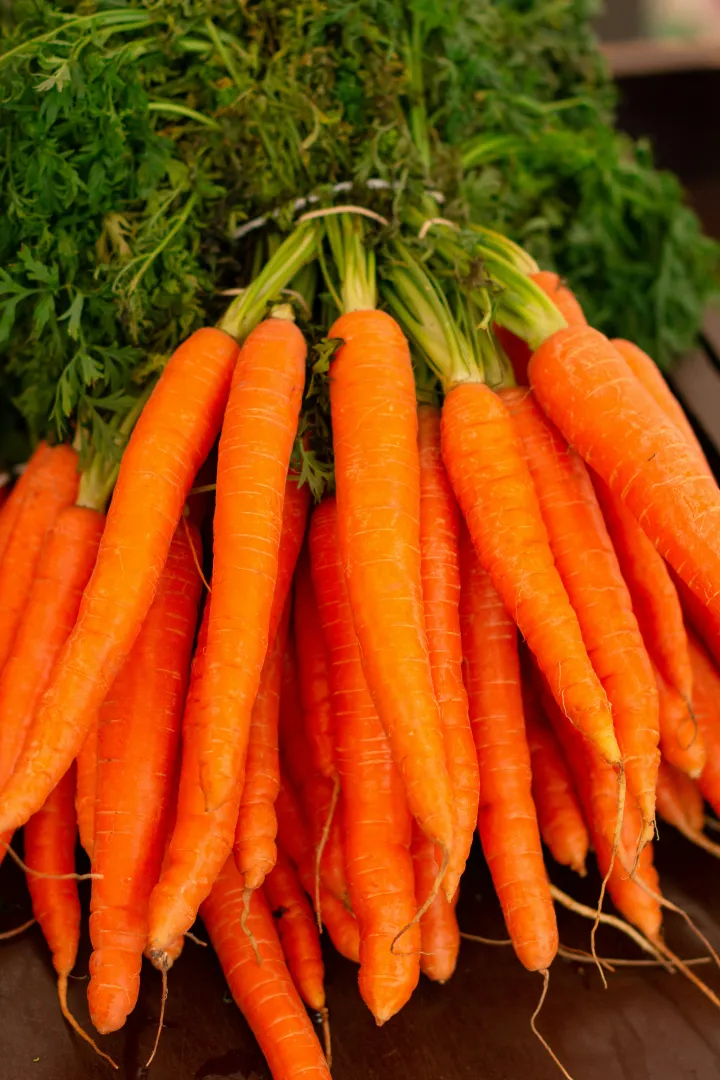
Carrots do best in a deep, light, stone-free soil with plenty of sun. Sow direct in short batches from late winter into early summer, thin carefully, and keep roots covered to help reduce carrot fly damage.
30 cm · Full Sun · Moderate Water
| Activity | January | February | March | April | May | June | July | August | September | October | November | December |
|---|---|---|---|---|---|---|---|---|---|---|---|---|
| Sow outdoors | No | No | No | Yes | Yes | No | No | No | No | No | No | No |
| Harvest | No | No | No | No | No | No | No | Yes | Yes | Yes | No | No |
UK averages · set your town for dates worked out from your local frost records · how dates are worked out
What to do through the growing season
Change the guide to see different planting timelines and tips.
Grow outdoors in a fine, stone-free bed for the main harvest. This suits the usual UK garden sowing pattern and gives the longest picking season.
01
Choose a deep, well-dug patch and break the soil down to a fine tilth before early March to mid-April. Rake out stones and do not add fresh manure, as that can split and fork the roots.
02
Sow thinly in shallow drills around mid-April to mid-May, then cover with of fine soil and water in well. Sow a fresh row every 21 days for a steady supply rather than one large crop.
03
Cover the row with fine insect-proof mesh straight after sowing, from mid-April. Keep the edges sealed, since carrot fly can find gaps very easily.
04
When the seedlings are up, from mid-May, thin them carefully to apart so the roots can swell properly. Do it on a still day and water the row afterwards to settle the soil.
05
Start lifting roots from early August once they are large enough to eat. Pull them as needed through early August to late October, and maincrop roots can often stay in the ground longer if the soil is free draining.
Popular varieties of Carrot to consider
A slim early carrot for quick sowings and smaller roots. Good for a light soil and picking young.
A dependable maincrop type with blunt, sweet roots and good texture. Common in UK gardens and suits most free-draining soils.
Bred to help reduce carrot fly damage in the garden. Useful where pest pressure is a regular problem.
A classic long-storing maincrop carrot with good flavour and size. Best when given a deep, stone-free bed.
Explore similar plants you might like