Swiss Giants
A well-known mixed strain with large, long-lasting flowers in a range of colours.
Xerochrysum bracteatum
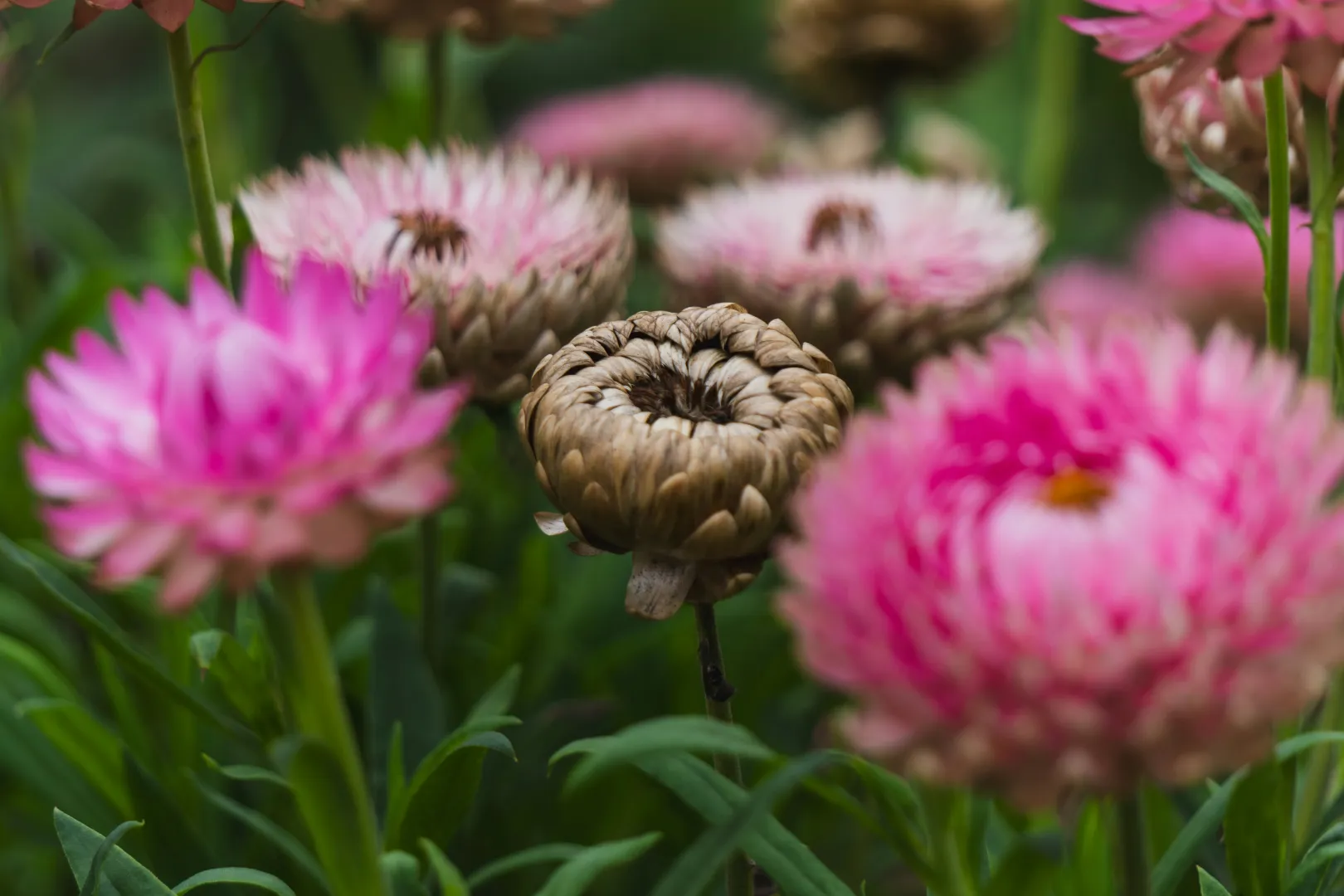
A half-hardy annual grown for long-lasting papery flowers. In the UK it does best started under cover, then planted out after frost risk has passed and grown on in a sunny, free-draining spot.
75 cm · Full Sun · Moderate Water
| Activity | January | February | March | April | May | June | July | August | September | October | November | December |
|---|---|---|---|---|---|---|---|---|---|---|---|---|
| Sow indoors | No | No | Yes | Yes | No | No | No | No | No | No | No | No |
| Plant out | No | No | No | No | Yes | No | No | No | No | No | No | No |
UK averages · set your town for dates worked out from your local frost records · how dates are worked out
What to do through the growing season
01
Sow seeds in modules or trays around mid-March to mid-April at a depth of . Keep them at and just moist until they germinate, then give them plenty of light so the seedlings do not stretch.
02
When the seedlings are large enough to handle, prick them out into individual pots around early April to mid-May. Handle them by the leaves, not the stems, and keep them growing on in bright, frost-free conditions.
03
Acclimatise the young plants gradually around early May to late May. Put them outside for a few hours at first, then extend the time over about a week so they get used to sun and wind.
04
Plant out around mid-May to late May once frosts have passed and the soil has warmed. Space plants apart in full sun, and water in thoroughly straight away.
05
Check plants from mid-June as they settle in, and keep the soil evenly moist in dry spells. A light liquid feed every 14 days helps maintain growth without making the plants soft and floppy.
06
From mid-June onwards, deadhead fading flowers regularly by cutting stems back to a leaf joint. This stops the plant setting seed and keeps it flowering well until the autumn frosts.
Popular varieties of Strawflower to consider
A well-known mixed strain with large, long-lasting flowers in a range of colours.
Soft pink flowers with a pale, papery sheen. Good for cutting and drying.
Bold orange blooms on sturdy stems, useful for borders and cutting.
Explore similar plants you might like