Galanthus nivalis
The common snowdrop, widely grown and naturalises well in UK gardens.
Galanthus nivalis
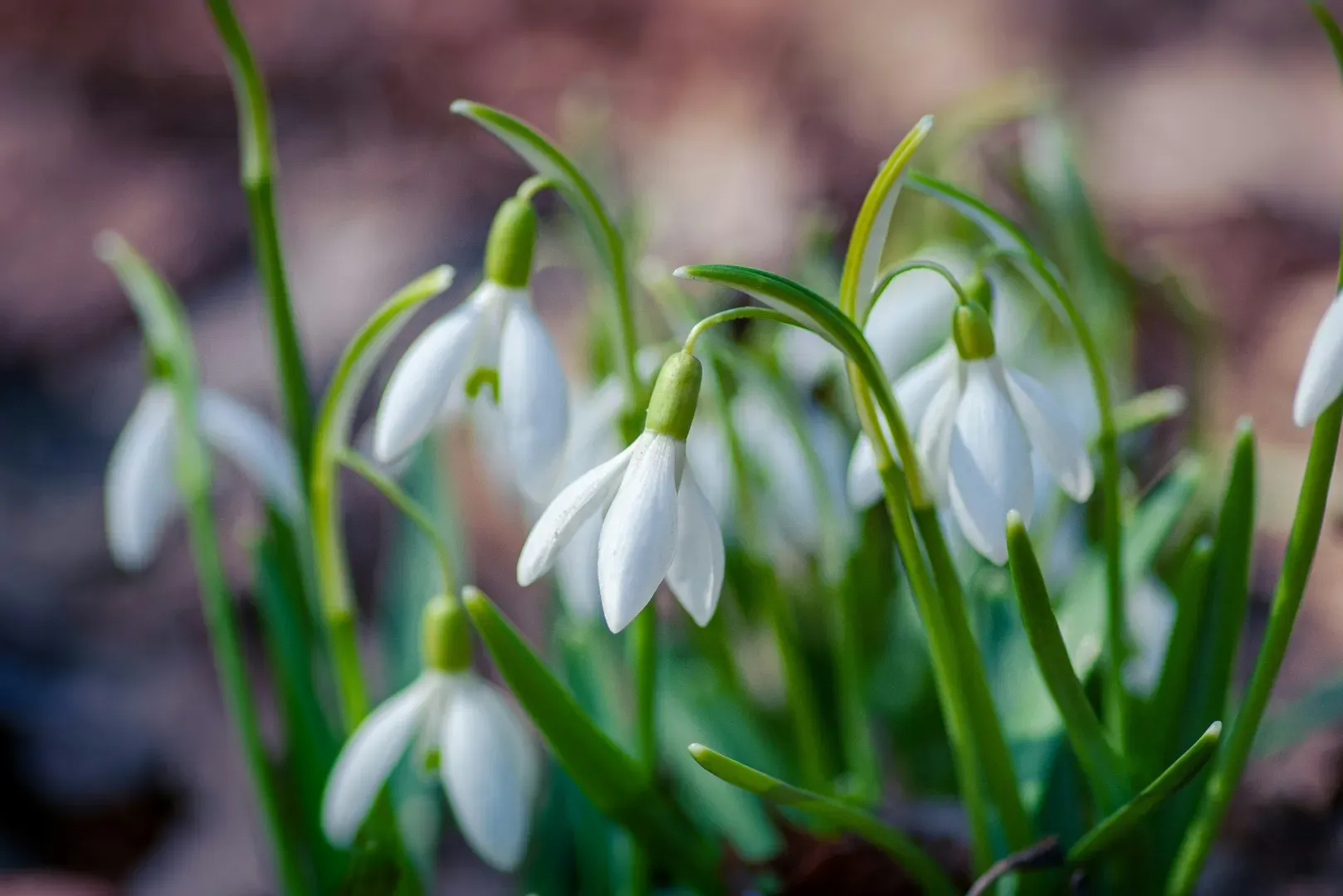
A small hardy bulb for shady spots and woodland-style planting. In the UK it is best planted 'in the green' just after flowering, in moist but free-draining soil, and left to settle in for naturalising over time.
15 cm · Partial Shade · Moderate Water
| Activity | January | February | March | April | May | June | July | August | September | October | November | December |
|---|---|---|---|---|---|---|---|---|---|---|---|---|
| Plant out | No | Yes | Yes | No | No | No | No | No | No | No | No | No |
UK averages · set your town for dates worked out from your local frost records · how dates are worked out
What to do through the growing season
01
Lift and replant the clumps while the leaves are still green, around mid-February to mid-March. Set them at roughly three times the bulb height, with the pointy end up, and space them apart in moist, free-draining soil. Water in thoroughly straight after planting.
02
Keep the planting area lightly moist from mid-February if the weather turns dry, and protect new growth from slugs and snails. These clumps have already flowered this year, so the blooms should be expected next season rather than now.
04
Keep the leaves intact from mid-April and do not tie them up or cut them off early. Let them yellow and collapse naturally for at least six weeks after flowering, then lift and divide congested clumps if needed.
Popular varieties of Snowdrop to consider
The common snowdrop, widely grown and naturalises well in UK gardens.
A double-flowered form with fuller blooms, good for naturalising in light shade.
A strong, reliable selection with neat flowers and good garden performance.
Explore similar plants you might like