Rocket F1
Tall, upright plants with strong stems and good weather tolerance.
Antirrhinum majus
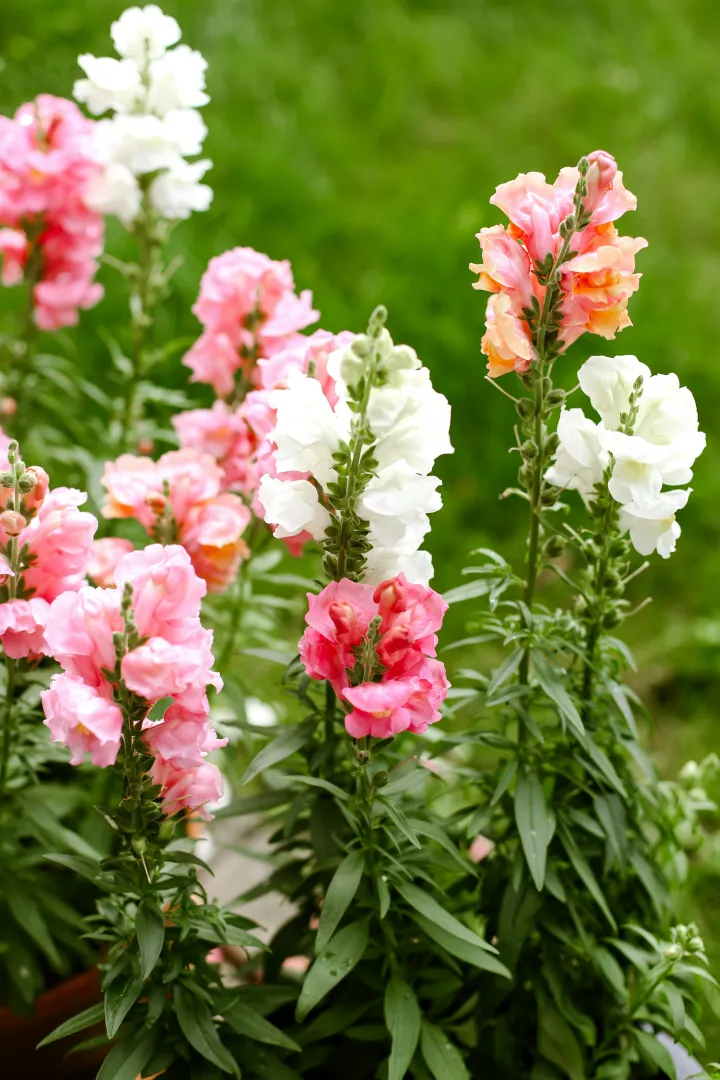
A half-hardy bedding flower for a bright, long-running display in a sheltered UK border or container. Start seeds under cover, then plant out after frost risk has passed and keep deadheading for a long flowering season.
60 cm · Full Sun · Moderate Water
| Activity | January | February | March | April | May | June | July | August | September | October | November | December |
|---|---|---|---|---|---|---|---|---|---|---|---|---|
| Sow indoors | No | Yes | Yes | No | No | No | No | No | No | No | No | No |
| Plant out | No | No | No | No | Yes | No | No | No | No | No | No | No |
UK averages · set your town for dates worked out from your local frost records · how dates are worked out
What to do through the growing season
01
Sow seeds thinly on the surface of moist compost in modules or trays around late February to late March. Do not cover them, as light helps germination. Keep them at in a bright place and water gently from below.
02
When seedlings are large enough to handle, move them into small pots and grow them on from early March. Keep the compost just moist and give them plenty of light so they do not get leggy.
03
Acclimatise the young plants outside over early May to late May. Put them out for a few hours at first, then leave them out longer each day so they can handle cooler air and sun without a setback.
04
Plant into final positions from mid-May, spacing them apart. Water in thoroughly straight away and keep fleece handy if a cold snap is forecast.
05
Remove fading flowers regularly from mid-June so the plants keep flowering rather than putting energy into seed. Water during dry spells and feed lightly every 14 days to keep growth steady through the season.
Popular varieties of Snapdragon to consider
Tall, upright plants with strong stems and good weather tolerance.
A reliable half-hardy group with a wide colour range and neat growth.
Double-flowered blooms on branching plants, good for cutting and borders.
Compact, double-flowered plants suited to pots and the front of borders.
Explore similar plants you might like