French Breakfast 3
Long, red roots with a white tip and a mild flavour. Good for quick summer cropping in open ground or containers.
Raphanus sativus
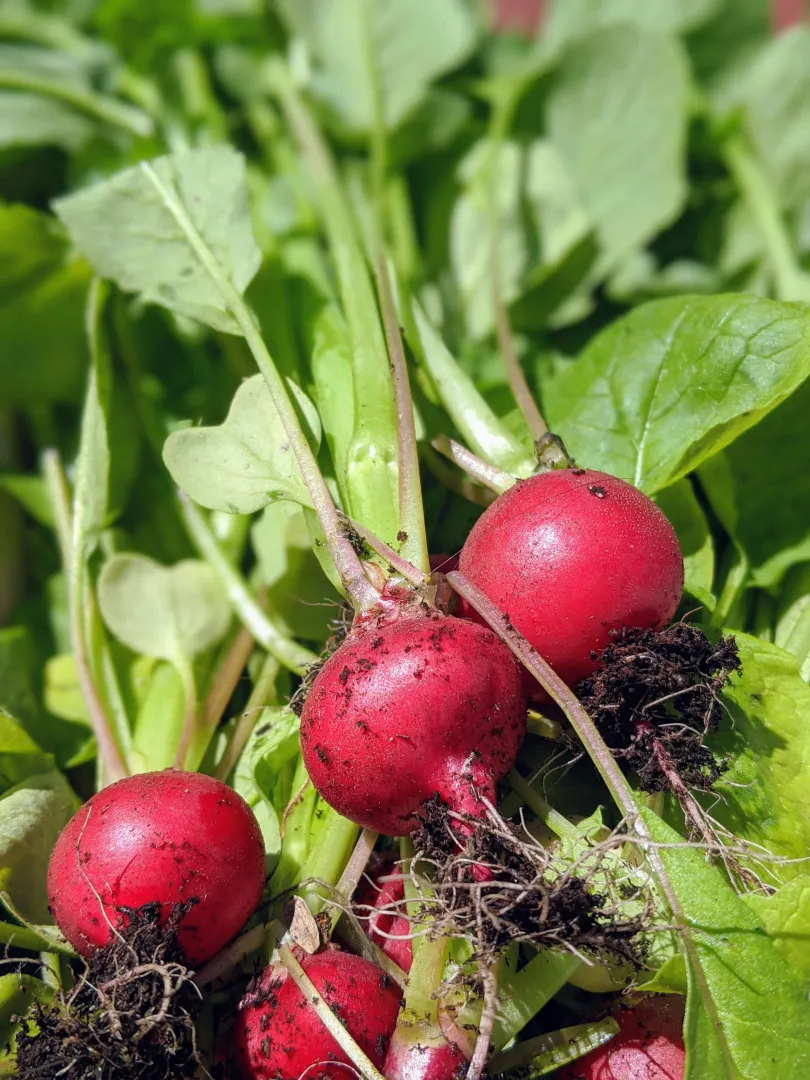
A fast, hardy root crop for UK gardens, best grown in cool weather for crisp roots with a clean peppery bite. Sow little and often in open ground or a deep container, keep the soil evenly moist, and pull roots promptly before they get woody.
20 cm · Full Sun · Moderate Water
| Activity | January | February | March | April | May | June | July | August | September | October | November | December |
|---|---|---|---|---|---|---|---|---|---|---|---|---|
| Sow outdoors | No | No | Yes | Yes | Yes | Yes | Yes | Yes | Yes | No | No | No |
| Harvest | No | No | No | Yes | Yes | Yes | Yes | Yes | Yes | Yes | No | No |
UK averages · set your town for dates worked out from your local frost records · how dates are worked out
What to do through the growing season
01
Sow seeds thinly in shallow drills around late March to late September. Cover with of fine soil and water the drills. Sow a fresh batch every 14 days. Skip a sowing in a hot, dry spell and wait for cooler, damper weather.
02
When seedlings are large enough to handle, from late March to late October, thin to apart as soon as the row looks crowded. Snip extras at soil level so you do not disturb the roots you want to keep.
03
From late March until late October, keep the soil evenly moist. Uneven watering splits the roots. If the soil dries out, they stay small, go woody, or bolt in heat.
04
Lift roots once they are about across, from late April until late October. Do not leave them in the ground. They go woody if you wait. Sow a fresh row to keep the crop coming.
Tap a plant to see why it works (or doesn't) with Radish.
Companion planting can deter pests, improve pollination, and make better use of space. Some plants confuse pests or attract beneficial insects; others improve soil or offer shade to neighbours that need it.
Popular varieties of Radish to consider
Long, red roots with a white tip and a mild flavour. Good for quick summer cropping in open ground or containers.
Round, red-and-white roots that stay crisp if picked small. A dependable choice for mixed sowings.
Small, round scarlet roots with quick maturity and reliable shape. Suits early and succession sowings.
A white, elongated radish with a clean flavour and fast growth. Best picked young for the best texture.
Explore similar plants you might like