Magnus
A reliable purple-flowered form with broad petals and good garden performance.
Echinacea purpurea
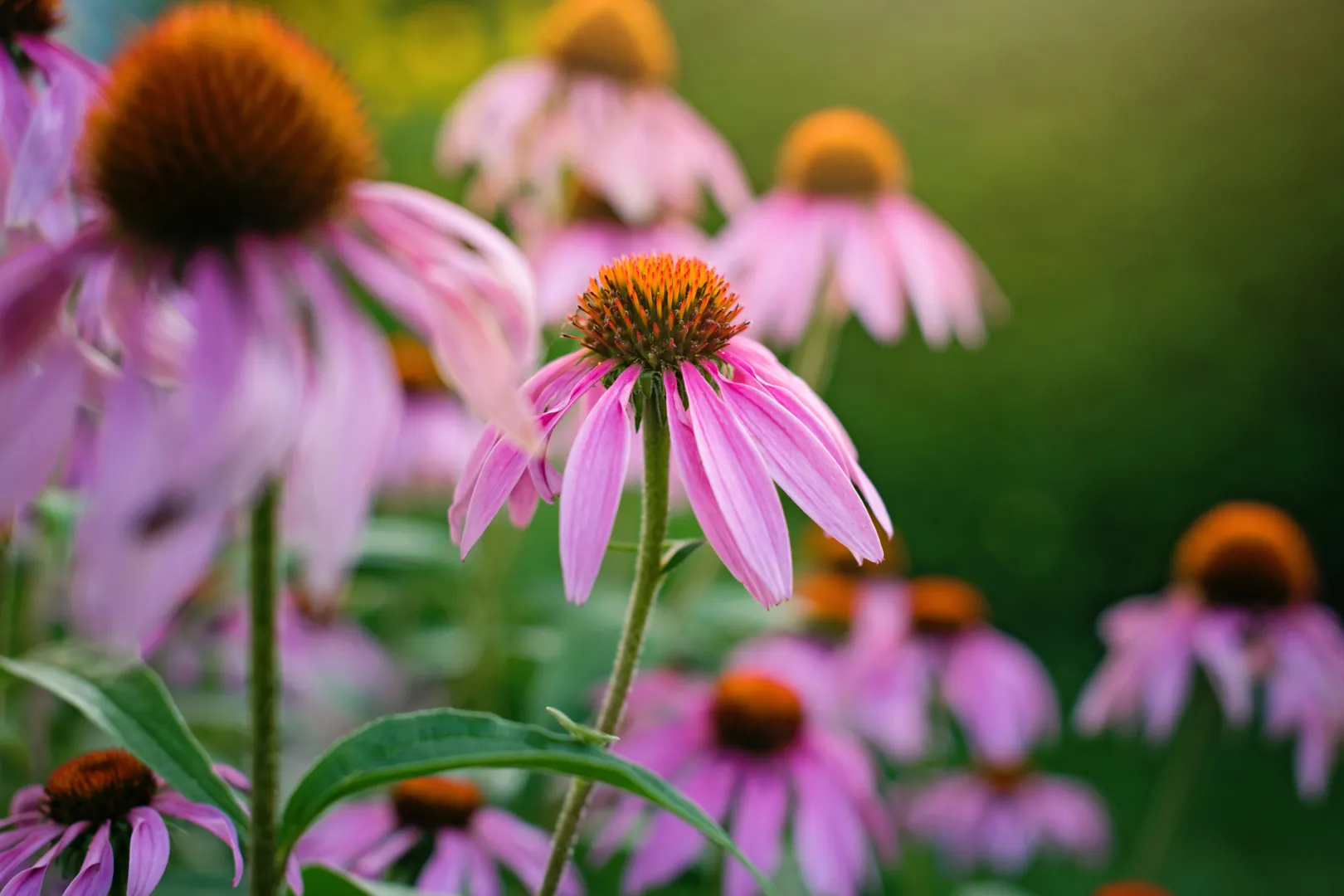
A hardy perennial for a sunny border or large container, grown for its daisy-like flowers and useful pollinator value. In UK gardens it does best in free-draining soil and may not flower well until its second year from seed.
90 cm · Full Sun · Moderate Water
| Activity | January | February | March | April | May | June | July | August | September | October | November | December |
|---|---|---|---|---|---|---|---|---|---|---|---|---|
| Sow indoors | No | No | Yes | No | No | No | No | No | No | No | No | No |
| Plant out | No | No | No | No | Yes | No | No | No | No | No | No | No |
UK averages · set your town for dates worked out from your local frost records · how dates are worked out
What to do through the growing season
01
Sow seeds in trays or modules around mid-March to late March, using a free-draining seed compost. Keep them at and only cover the seed lightly, as it needs some light to germinate.
02
Move seedlings on when the first true leaves appear, from early April. Handle them by the leaves, not the stems, and pot them on into individual small pots.
03
Acclimatise young plants gradually from mid-April to early May before planting out. Put them outside in a sheltered spot for a few hours at first, then extend the time each day over about 10 days.
04
Plant in a sunny, free-draining spot from early May at apart. Water in thoroughly straight after planting and keep an eye on slugs around fresh growth.
05
Keep plants evenly moist through early May to early July while roots settle. Water at the base in dry spells, but do not leave the soil soggy.
06
Remove faded flowers from early July to late October to keep the display going for longer. Cut stems back to a strong pair of leaves and leave a few heads later on if you want seed for birds.
07
Cut back old stems during early October to late November. If you left seed heads for birds, leave those stems standing until late winter, then remove them. Trim the rest down to a little crown of growth at soil level, taking care not to damage new shoots.
Popular varieties of Echinacea to consider
A reliable purple-flowered form with broad petals and good garden performance.
White flowers with orange cones, useful for a softer colour scheme.
Compact and free-flowering, with rich pink blooms on shorter stems.
Unusual green flowers for a more muted planting scheme.
Explore similar plants you might like