Lucifer
A widely grown crocosmia with bright red flowers and good garden vigour.
Crocosmia spp.
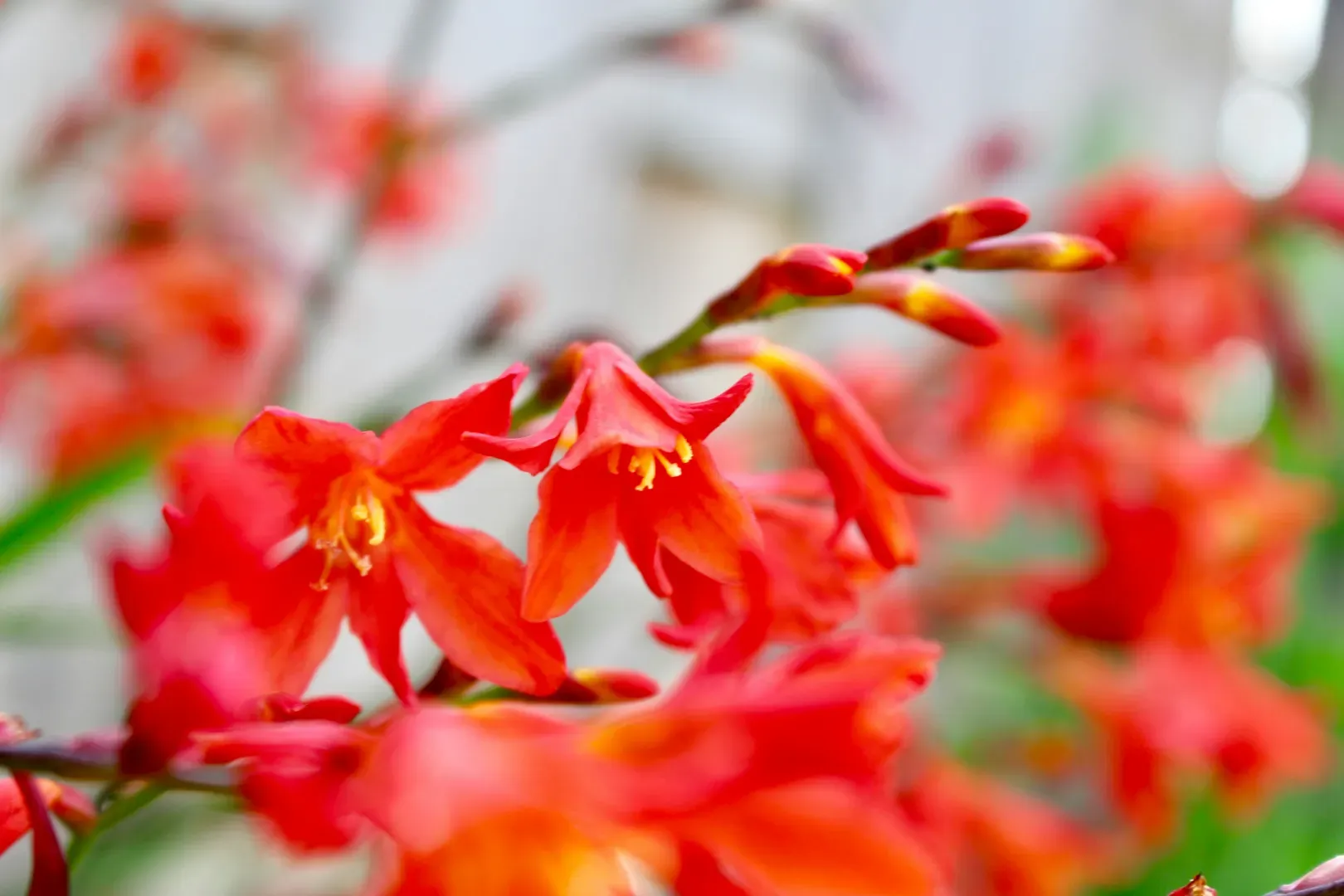
Hardy perennial grown from corms in UK borders. Plant in moist but free-draining soil in sun or light shade, water well after planting, and leave the clump to settle before lifting and dividing every few years.
90 cm · Full Sun · Moderate Water
| Activity | January | February | March | April | May | June | July | August | September | October | November | December |
|---|---|---|---|---|---|---|---|---|---|---|---|---|
| Plant out | No | No | Yes | Yes | No | No | No | No | No | No | No | No |
UK averages · set your town for dates worked out from your local frost records · how dates are worked out
What to do through the growing season
01
Plant corms during late March to mid-April, deep and apart, in firm, well-drained soil. Water in thoroughly straight after planting.
02
Keep the soil evenly moist through late March to late May while the corms root in. Give a deep soak in dry spells, then ease off once new growth is strong and the clump is settled.
03
From mid-June, remove faded flower stems as they finish to keep the plant tidy and encourage a longer display. Cut each stem back to the base once the last flowers on it have gone over.
04
After hard frost has blackened the leaves, cut the faded foliage to the base during late October to late November. Leave any green leaves in place until they die back naturally, because they are feeding next year's growth.
Popular varieties of Crocosmia to consider
A widely grown crocosmia with bright red flowers and good garden vigour.
Compact, free-flowering with orange blooms marked darker at the centre.
A reliable yellow-flowered cultivar that works well in mixed borders.
Orange-yellow flowers on arching stems, useful for a naturalistic look.
Explore similar plants you might like