Green in the Snow
A reliable, hardy variety for cool-weather sowings with good flavour and steady leaf production.
Brassica juncea
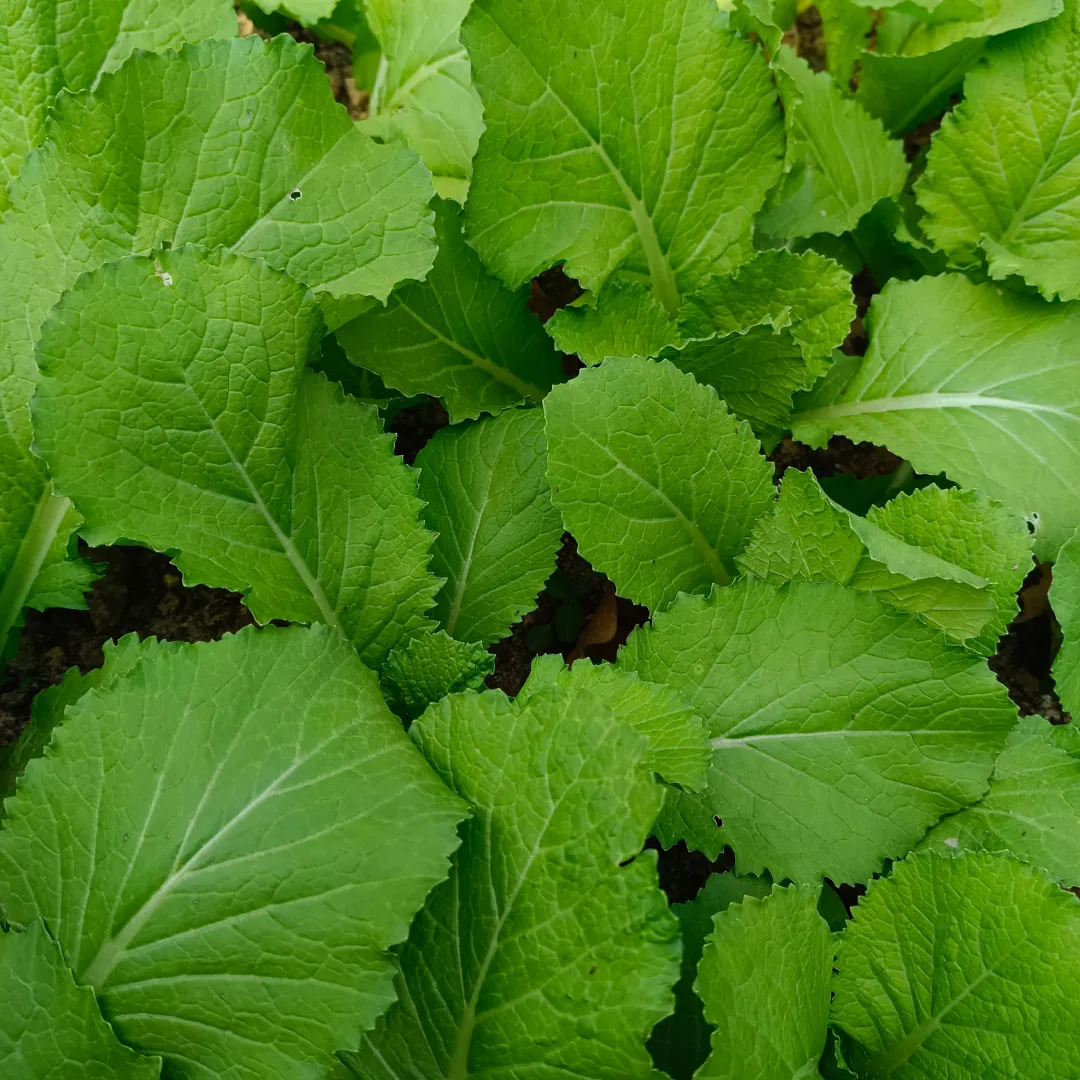
A fast-growing leafy brassica for cool and mild weather. Sow in succession from spring through late summer for a steady supply of pungent young leaves, and keep it well watered in dry spells to slow bolting.
30 cm · Full Sun · Moderate Water
Calibrated to Penberth · last frost ≈ 26 Mar
| Activity | January | February | March | April | May | June | July | August | September | October | November | December |
|---|---|---|---|---|---|---|---|---|---|---|---|---|
| Sow | No | No | Yes | Yes | Yes | Yes | Yes | Yes | No | No | No | No |
| Harvest | Yes | No | No | No | No | Yes | Yes | Yes | Yes | Yes | Yes | Yes |
Step-by-step instructions for growing Mustard Greens
01
Sow small batches around 5th March - 26th August, setting seed about deep in prepared soil or compost. Sow a fresh batch every 21 days for a steady supply of young leaves rather than one glut.
02
When seedlings are large enough to handle from 10th June, thin them to their final spacing so they do not crowd each other. Keep the strongest plants and snip extras at soil level to avoid disturbing the roots.
03
From 7th June, check plants often and protect them from slugs and snails, which can strip young leaves overnight. Use pellets only if needed and follow the label, or add barriers and hand-pick after rain.
04
From 14th June until 2nd January, keep the soil evenly moist, especially in warm spells and under cover. Water at the base of the plants so growth stays steady and the leaves stay tender.
05
Start picking from 30th June once plants are well developed. Cut outer leaves little and often for a cut-and-come-again crop, or lift whole plants if you want them young and mild.
Tap a plant to see why it works (or doesn't) with Mustard Greens.
Companion planting can deter pests, improve pollination, and make better use of space. Some plants confuse pests or attract beneficial insects; others improve soil or offer shade to neighbours that need it.
Popular varieties of Mustard Greens to consider
A reliable, hardy variety for cool-weather sowings with good flavour and steady leaf production.
Large purple-tinged leaves with a stronger flavour and fast growth in cool conditions.
A fast, mild-leaved type that can be picked young for repeated harvests.
Explore similar plants you might like
See how Mustard Greens timing shifts in other towns with different frost dates.