Glen Ample
A widely grown summer-fruiting raspberry with large, good-flavoured berries and strong yields.
Rubus idaeus
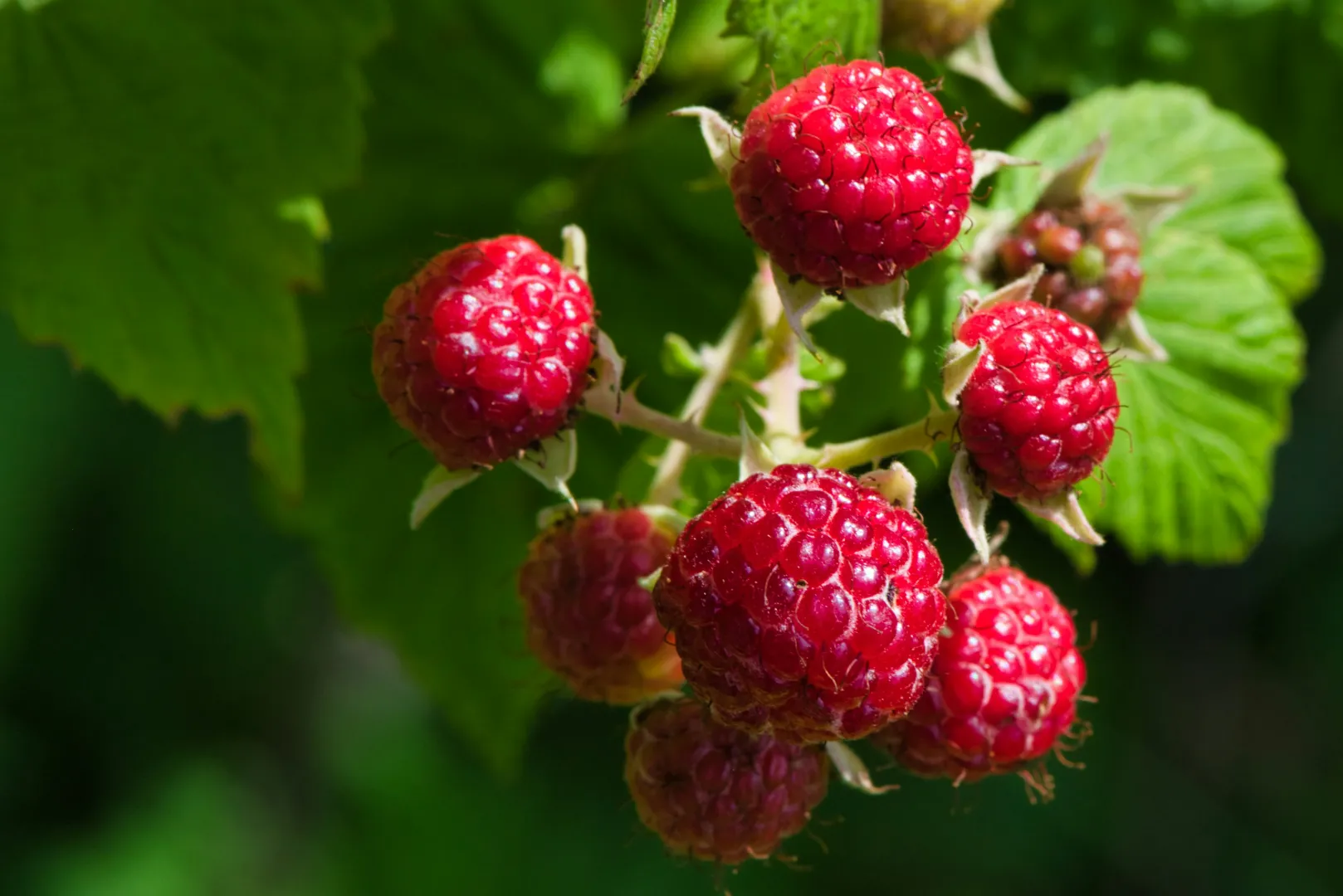
A hardy cane fruit for UK gardens, best grown in a sunny, sheltered spot with fertile, moisture-retentive soil. Plant bare-root canes while dormant, keep them well watered in the first season, mulch each spring, and tie in new growth so the plants stay productive.
180 cm · Full Sun · High Water
Calibrated to Paston Green · last frost ≈ 14 Apr
| Activity | January | February | March | April | May | June | July | August | September | October | November | December |
|---|---|---|---|---|---|---|---|---|---|---|---|---|
| Plant out | Yes | Yes | Yes | Yes | No | No | No | No | No | No | No | Yes |
| Harvest | No | No | No | No | No | Yes | Yes | No | No | No | No | No |
Step-by-step instructions for growing Raspberry
Change the guide to see different planting timelines and tips.
Grow these in the ground or large containers in a sunny, sheltered spot. They fruit on canes made the previous year, so the first crop comes after establishment.
01
Plant bare-root canes from 3rd December to 12th April in well-dug, fertile soil. Set them at the same depth they were growing before, water in thoroughly straight away, and keep the soil evenly moist. Container-grown plants can be planted at other times if the ground is workable.
02
From 29th April, water newly planted canes regularly through dry spells so roots spread well. Start once growth resumes in spring, then give a deep soak during dry weather rather than frequent light watering.
03
Top-dress from 28th February with compost or well-rotted manure, then apply a balanced feed if growth looks weak. Repeat every 365 days while the plants are in active growth.
04
Put netting in place from 19th May before the berries start to colour. Support the net well so birds cannot get under it, and check access for picking.
05
Pick from 8th June to 13th July as soon as the berries are fully coloured and come away easily. Harvest every couple of days in dry weather, and use shallow containers so the fruit does not squash.
06
After harvest, from 15th July cut out the canes that fruited this year at ground level and tie in the strongest new shoots. Leave this season's replacement canes in place for next year's crop and keep the row tidy.
Tap a plant to see why it works (or doesn't) with Raspberry.
Companion planting can deter pests, improve pollination, and make better use of space. Some plants confuse pests or attract beneficial insects; others improve soil or offer shade to neighbours that need it.
Popular varieties of Raspberry to consider
A widely grown summer-fruiting raspberry with large, good-flavoured berries and strong yields.
An early summer-fruiting variety that crops well in UK gardens and is often grown for reliable flavour.
A classic autumn-fruiting raspberry with easy-picking fruit and a long cropping season.
A productive autumn-fruiting variety that gives good-quality berries over a long picking period.
Explore similar plants you might like
See how Raspberry timing shifts in other towns with different frost dates.