Watercress in Huntly
Nasturtium officinale
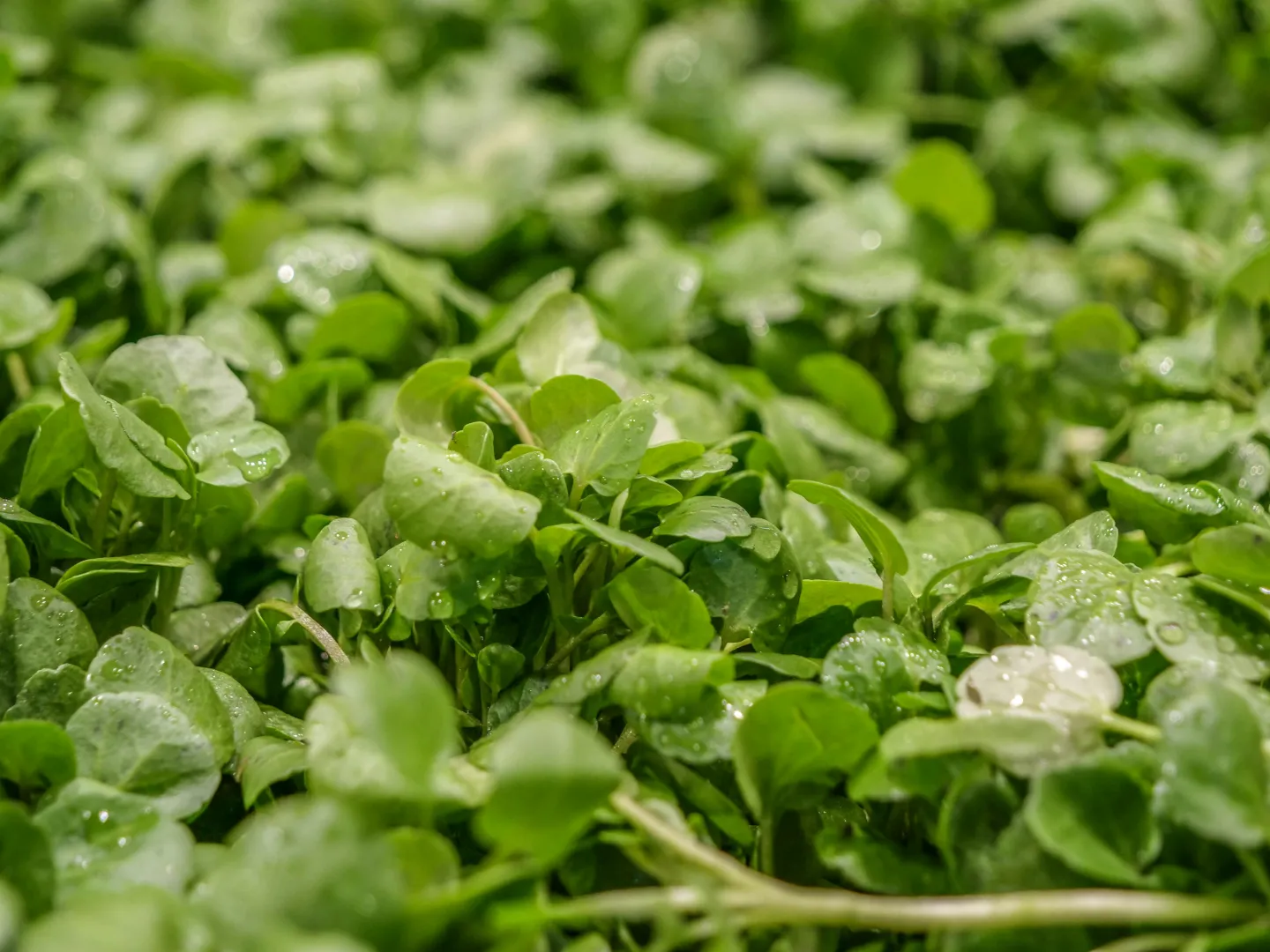
Watercress is a hardy perennial leafy crop that grows best in shallow running water or very wet soil. In the UK it’s usually grown outdoors in a pond basket, streamside bed, or container kept constantly wet, and it gives the best leaves in cool weather.
20 cm · Partial Shade · High Water
Calibrated to Huntly · last frost ≈ 24 May
| Activity | January | February | March | April | May | June | July | August | September | October | November | December |
|---|---|---|---|---|---|---|---|---|---|---|---|---|
| Sow | No | No | No | Yes | Yes | No | No | No | No | No | No | No |
| Plant out | No | No | No | No | Yes | Yes | No | No | No | No | No | No |
| Harvest | No | No | No | No | No | Yes | Yes | Yes | Yes | Yes | Yes | Yes |
Growing guide
Step-by-step instructions for growing Watercress
01
Sow Seeds
19 Apr to 31 May every 3 weeksSow seeds around 19th April - 31st May on the surface of very moist compost, then press them in lightly rather than burying them. Keep the compost constantly damp while they germinate, and sow a fresh batch every 21 days for a steady supply.
02
Thin Seedlings
7 Jun to 14 JunWhen seedlings are large enough to handle, from 7th June, thin them so the strongest plants have room to spread. Keep the soil wet at all times, because even brief drying checks growth.
03
Transplant
10 May to 21 JunMove seedlings to their final spot around 10th May - 21st June, spacing them well apart in mud-like soil or a shallow run of water. Water in thoroughly straight after planting and keep the roots submerged or constantly wet.
04
Feed Plants
31 May to 28 Sept every 2 weeksFrom 31st May, give a very light liquid feed every 14 days if growth slows, but avoid strong feeding that makes the leaves coarse. Keep the bed weed-free and topped up with water.
05
Harvest Leaves
28 Jun to 20 DecStart cutting from 28th June when plants are well rooted and the shoots are leafy. Pick little and often through to 20th December, taking the outer stems first and leaving the centre to regrow.
Companion plants
Tap a plant to see why it works (or doesn't) with Watercress.
Good companions
Plants to avoid
Why companion planting matters
Companion planting can deter pests, improve pollination, and make better use of space. Some plants confuse pests or attract beneficial insects; others improve soil or offer shade to neighbours that need it.
Related plants
Explore similar plants you might like