Bocking 14
A common sterile Russian comfrey selection, widely used in UK gardens for leaf production and as a mulch crop.
Symphytum officinale
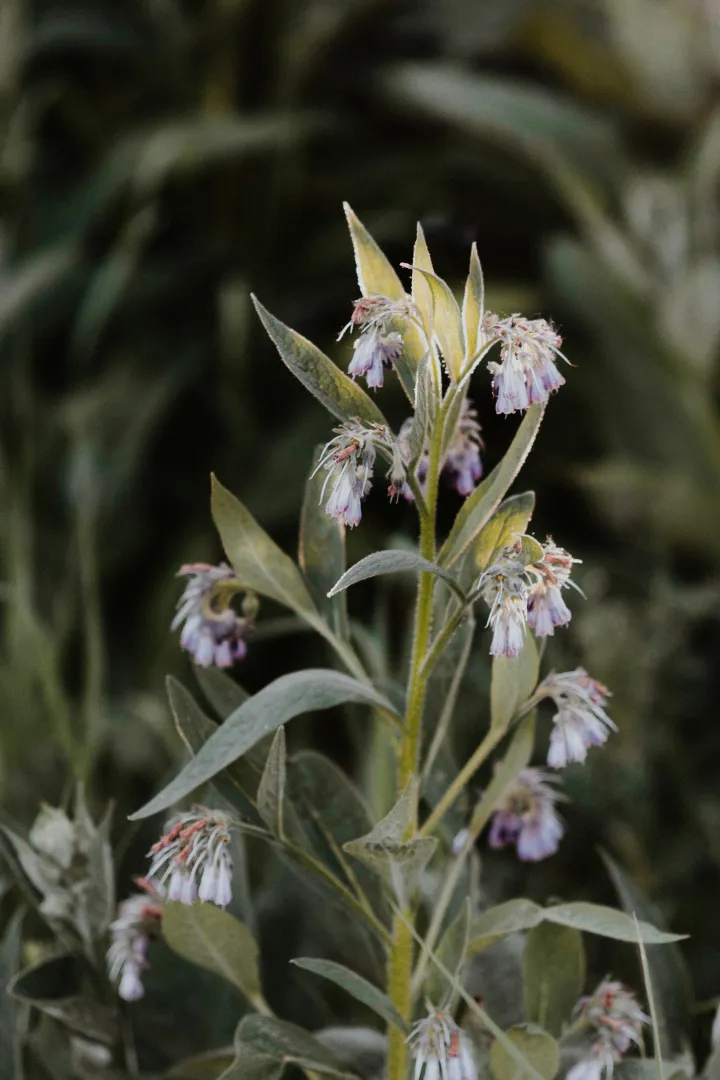
A hardy perennial for a permanent UK garden bed. It grows best in moist, fertile soil and is usually planted from crowns or bare roots in spring, then cut back for feed a few times each year once established.
100 cm · Partial Shade · Moderate Water
Calibrated to Forsinard · last frost ≈ 9 Jun
| Activity | January | February | March | April | May | June | July | August | September | October | November | December |
|---|---|---|---|---|---|---|---|---|---|---|---|---|
| Plant out | No | No | No | No | Yes | Yes | Yes | No | No | No | No | No |
| Harvest | No | No | No | No | No | Yes | Yes | Yes | Yes | Yes | No | No |
Step-by-step instructions for growing Comfrey
01
Clear the site of perennial weeds and dig in plenty of well-rotted compost or manure before planting. Work the soil to a fine tilth and leave it settled for 10th May - 23rd June so the bed is ready for a long-term planting.
02
Plant dormant crowns or bare roots once the ground is workable, setting them at depth. Space them apart, then water in well straight after planting.
03
Keep the bed clear of weeds and water during dry spells through 16th June - 14th October while the roots settle in. Do not cut any growth in the first year, let the foliage build the root crown for future harvests.
04
Top-dress the crown area with compost or a balanced organic feed as new growth starts. Repeat once a year from 26th May for steady leafy growth and better cutting the following season.
05
Cut young leaves and stems for feed from 9th June once the plant is established. Take only a few cuts over 9th June - 7th October, then stop so the plant can rebuild its crown for next year.
06
After the first frosts, cut the dying foliage down to ground level and clear away debris from 8th August - 5th September. This helps keep the planting tidy and reduces places where pests can overwinter.
Tap a plant to see why it works (or doesn't) with Comfrey.
Companion planting can deter pests, improve pollination, and make better use of space. Some plants confuse pests or attract beneficial insects; others improve soil or offer shade to neighbours that need it.
Popular varieties of Comfrey to consider
A common sterile Russian comfrey selection, widely used in UK gardens for leaf production and as a mulch crop.
A well-known comfrey selection grown for vigorous leafy growth and frequent cutting for compost or liquid feed.
Explore similar plants you might like