Black Star
Deep burgundy-red flowers with good stem length for cutting.
Gladiolus spp.
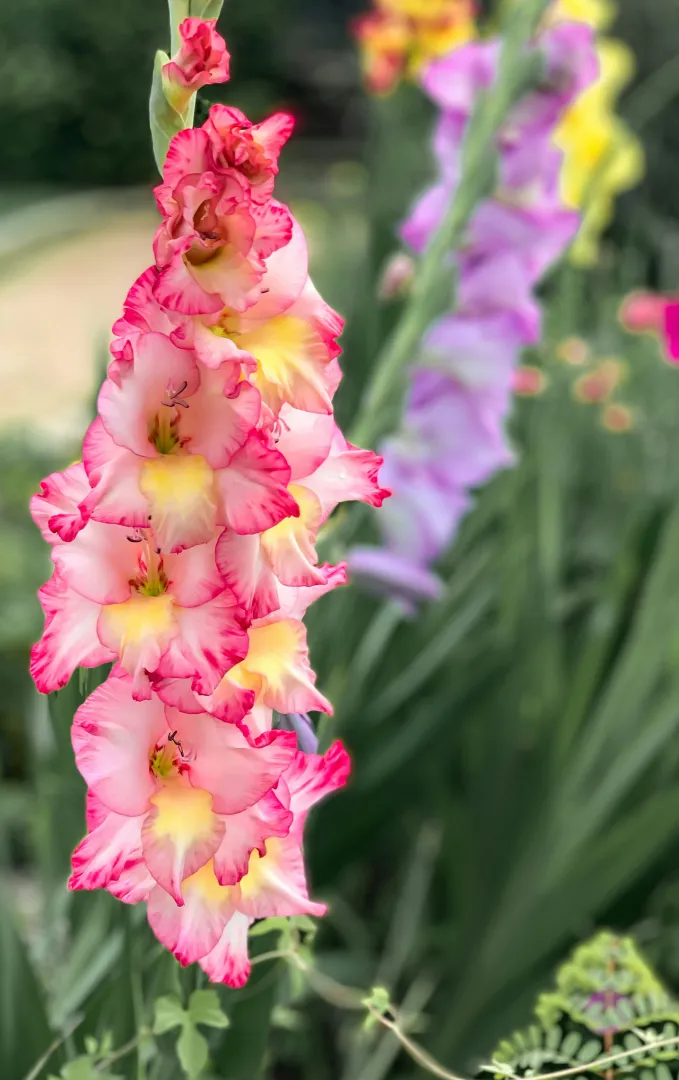
Half-hardy corms grown for tall summer flower spikes. Plant corms in a sunny, sheltered spot after frost risk has passed, or start them in pots under cover for an earlier display.
120 cm · Full Sun · Moderate Water
Calibrated to Penrhosfeilw · last frost ≈ 30 Mar
| Activity | January | February | March | April | May | June | July | August | September | October | November | December |
|---|---|---|---|---|---|---|---|---|---|---|---|---|
| Sow | Yes | Yes | Yes | Yes | No | No | No | No | No | No | No | No |
| Plant out | No | No | No | Yes | No | No | No | No | No | No | No | No |
| Harvest | No | No | No | No | No | No | Yes | Yes | Yes | Yes | Yes | No |
Step-by-step instructions for growing Gladiolus
01
Plant corms around 28th January - 30th April. Set them with the pointed end up, at a depth of , and space them apart. Keep the earliest sowings under cover in pots if frost is still a risk, then stagger further plantings every 14 days for a longer display.
02
Move pot-grown corms into their final position from 13th April, once the soil has warmed and frost risk has passed. Water them in thoroughly straight after planting, then put in canes or discreet supports before the stems get tall so wind does not rock the corms loose.
03
From 13th July to 29th November, cut spikes for the house when the lowest florets begin to open. Remove spent flowers regularly and keep the stem base fed and watered in dry spells so more blooms follow.
04
After 29th November - 13th December, once frost has blackened the foliage, cut the stems down, lift the corms and dry them for a few days in a warm airy place. Store them frost-free in dry compost or peat-free dry material. In mild areas with free-draining soil, a thick dry mulch can sometimes be enough to keep them in place.
Tap a plant to see why it works (or doesn't) with Gladiolus.
Companion planting can deter pests, improve pollination, and make better use of space. Some plants confuse pests or attract beneficial insects; others improve soil or offer shade to neighbours that need it.
Popular varieties of Gladiolus to consider
Deep burgundy-red flowers with good stem length for cutting.
Classic bright red spikes, widely grown in UK gardens.
White flowers with a red edge, useful for a lighter colour scheme.
Large pink-and-white blooms on strong stems.
Explore similar plants you might like
See how Gladiolus timing shifts in other towns with different frost dates.