Excelsior Hybrids
Mixed-colour foxgloves with tall, dependable flower spikes for cottage gardens.
Digitalis purpurea
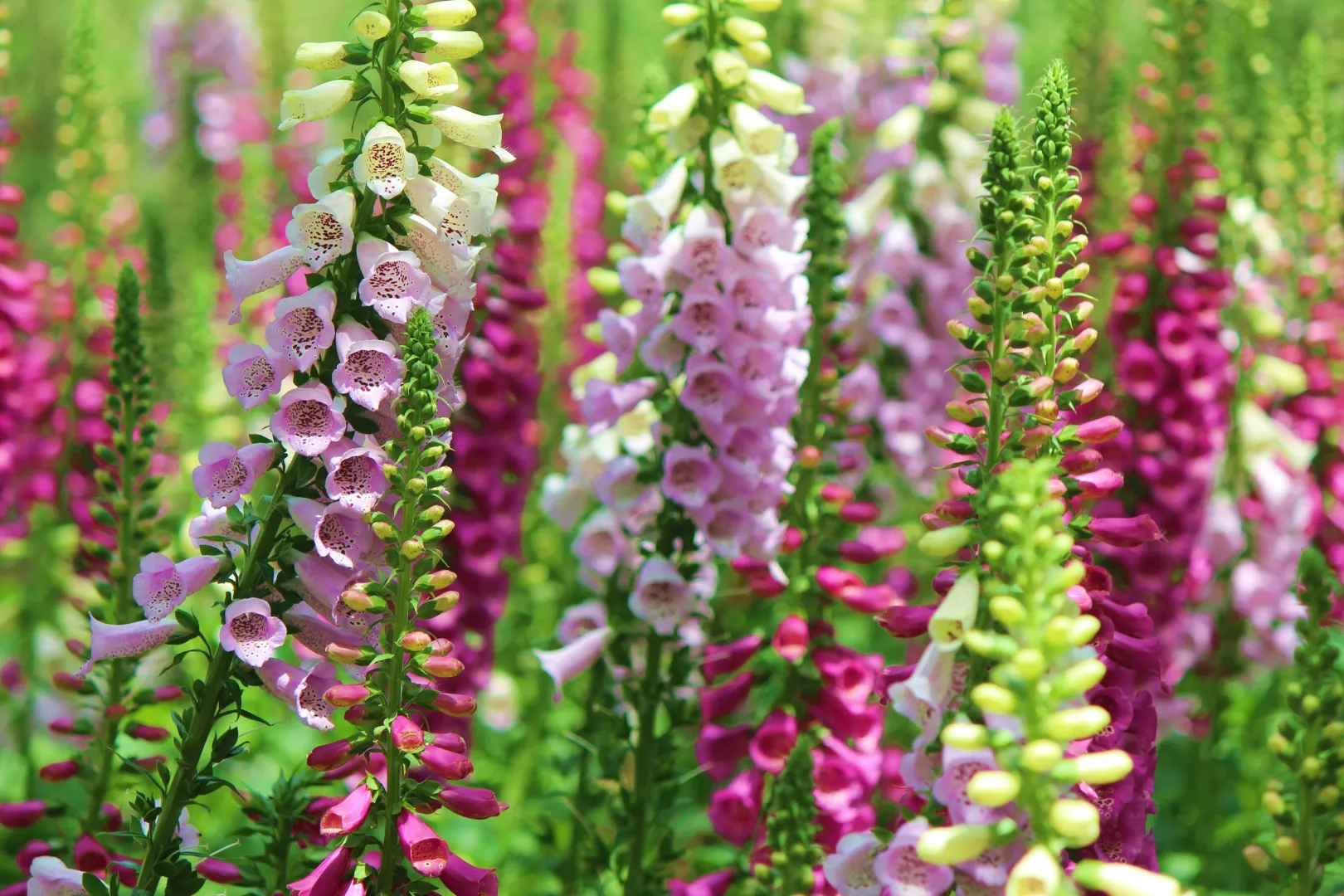
A hardy biennial for UK gardens, foxgloves are usually grown from seed sown in early summer, then moved to their flowering position once plants are sturdy. They flower the following year and often self-seed freely, so leave a few spikes if you want them to return. All parts are toxic, so wear gloves and wash hands after handling.
150 cm · Partial Shade · Moderate Water
Calibrated to Penrhiwgoch · last frost ≈ 6 May
| Activity | January | February | March | April | May | June | July | August | September | October | November | December |
|---|---|---|---|---|---|---|---|---|---|---|---|---|
| Sow | No | No | No | No | Yes | Yes | Yes | Yes | No | No | No | No |
| Plant out | No | No | No | No | No | No | No | No | Yes | Yes | No | No |
| Harvest | No | No | Yes | Yes | Yes | No | No | No | No | No | No | No |
Step-by-step instructions for growing Foxglove
01
Sow thinly around 6th May - 6th August in trays, modules, or a prepared seedbed. Use a light covering of compost and keep the surface just moist. Wear gloves when handling seed and plants, and wash your hands after sowing because every part of the plant is toxic.
02
When seedlings are large enough to handle, thin them out so the strongest plants can develop without crowding. Keep the compost or soil evenly moist, but don't let it stay soggy.
03
Move sturdy young plants to their final positions around 1st September - 6th October. Space them apart in moist, free-draining soil with some light shade, then water them in thoroughly straight away.
04
From 18th September, keep plants watered in dry spells and protect them from slugs, which can badly damage young rosettes. If the weather turns sharp after moving them, use fleece or cloches for a short spell until roots take hold.
05
Flowers should open from 17th March and can continue through 16th May the following year. Deadhead spent spikes to keep the display going, but leave a few if you want self-sown seedlings for later years.
Tap a plant to see why it works (or doesn't) with Foxglove.
Companion planting can deter pests, improve pollination, and make better use of space. Some plants confuse pests or attract beneficial insects; others improve soil or offer shade to neighbours that need it.
Popular varieties of Foxglove to consider
Mixed-colour foxgloves with tall, dependable flower spikes for cottage gardens.
A softer apricot-pink form that works well in partial shade.
A white foxglove with clean-looking spikes that brightens darker corners.
Cream flowers with rich maroon markings inside each bloom.
Explore similar plants you might like
See how Foxglove timing shifts in other towns with different frost dates.