All The Year Round
A reliable open-pollinated type for general use and succession sowing.
Brassica oleracea var. botrytis
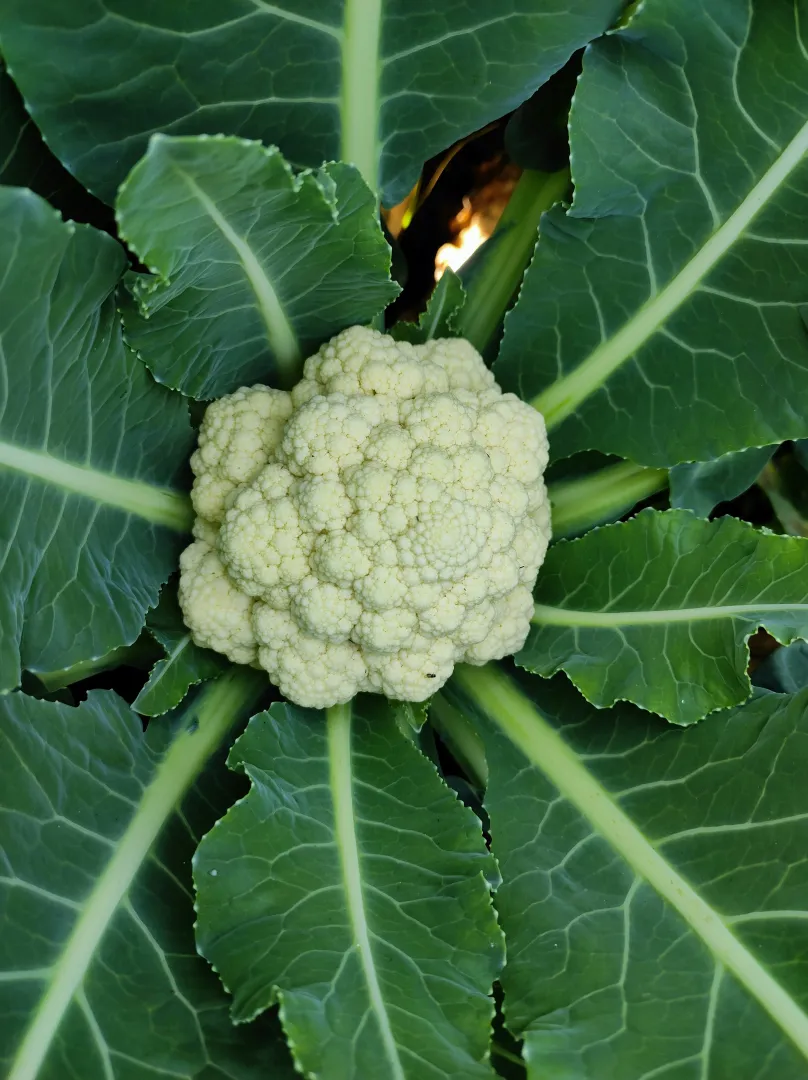
A brassica grown for its tight white curds. In the UK it needs steady growth, firm soil, and protection from pigeons and cabbage white butterflies. Keep it well watered in dry spells or the curds can stay small or go loose.
60 cm · Full Sun · Moderate Water
Calibrated to Penare · last frost ≈ 15 Mar
| Activity | January | February | March | April | May | June | July | August | September | October | November | December |
|---|---|---|---|---|---|---|---|---|---|---|---|---|
| Sow indoors | Yes | Yes | No | No | No | No | No | No | No | No | No | No |
| Plant out | No | No | Yes | Yes | No | No | No | No | No | No | No | No |
| Harvest | Yes | No | No | No | No | Yes | Yes | Yes | Yes | Yes | Yes | Yes |
Step-by-step instructions for growing Cauliflower
01
Sow seeds in modules around 29th January - 13th February, about deep. Keep them cool and evenly moist, then prick out the strongest seedlings once they have a couple of true leaves.
02
Plant out around 29th March - 12th April, when seedlings are sturdy and easy to handle. Set them at final spacing, water in well, and firm the soil hard around each plant so it will not rock in the wind.
03
From 5th April, fit fine netting over the crop and keep the edges well sealed to block pigeons and cabbage white butterflies. Add brassica collars at the stem base soon after planting to reduce cabbage root fly damage.
04
Start feeding from 5th April and keep going until 3rd January. Use a nitrogen-rich feed every 28 days, and keep the soil moist so the plants grow on steadily rather than checking.
05
Cut curds from 4th June - 3rd January while they are still tight and before the flower heads loosen. Harvest with a clean knife, and pick promptly once the curd reaches a good size because warm spells can push plants into flower quickly.
Tap a plant to see why it works (or doesn't) with Cauliflower.
Companion planting can deter pests, improve pollination, and make better use of space. Some plants confuse pests or attract beneficial insects; others improve soil or offer shade to neighbours that need it.
Popular varieties of Cauliflower to consider
A reliable open-pollinated type for general use and succession sowing.
A neat white variety that can be grown for a dependable summer crop.
Suited to later sowing for a larger curd in cooler weather.
A classic early type for smaller, quick-maturing curds.
Explore similar plants you might like
See how Cauliflower timing shifts in other towns with different frost dates.