Timperley Early
An early cropping variety that can be forced for very early harvests under pots or in darkness.
Rheum × hybridum
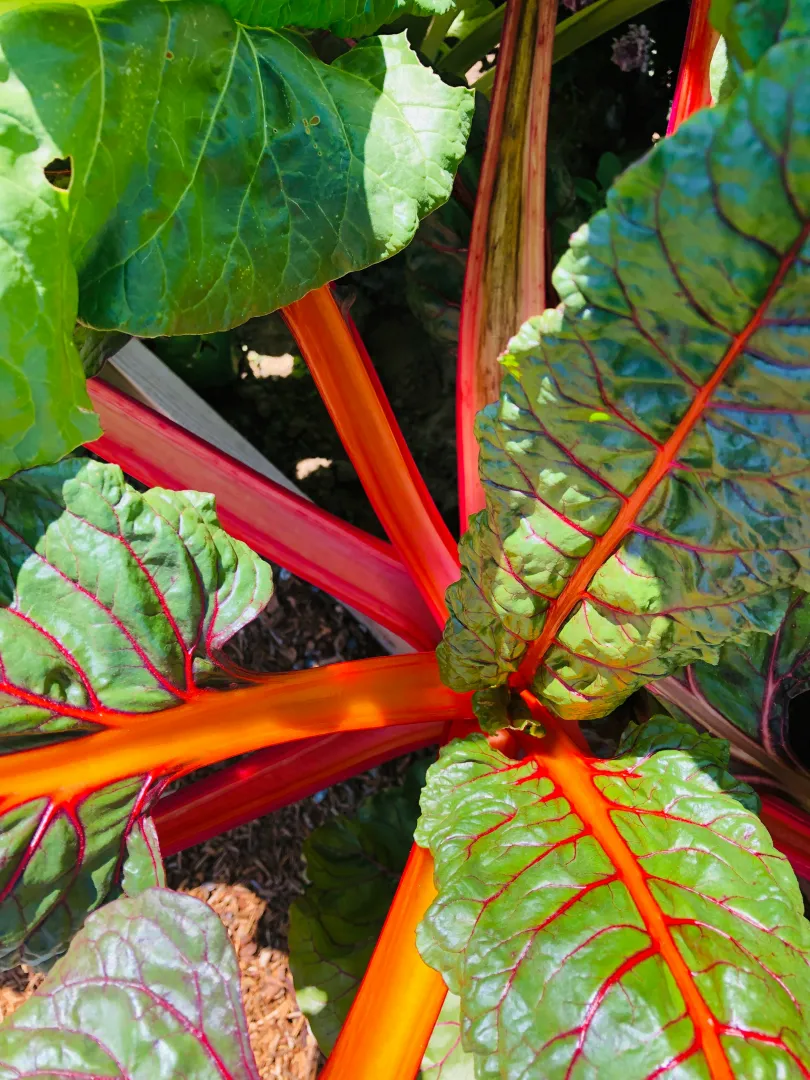
A hardy perennial for a permanent UK bed. Plant crowns in rich, well-drained soil and leave them to establish before taking a light crop from year two.
100 cm · Full Sun · Moderate Water
Calibrated to Parting of the Heaths · last frost ≈ 1 May
| Activity | January | February | March | April | May | June | July | August | September | October | November | December |
|---|---|---|---|---|---|---|---|---|---|---|---|---|
| Plant out | No | No | No | Yes | Yes | No | No | No | No | No | No | No |
| Harvest | No | No | No | Yes | Yes | Yes | No | No | No | No | No | No |
Step-by-step instructions for growing Rhubarb
01
Prepare a permanent bed around 1st April - 15th May. Remove perennial weeds thoroughly and work in plenty of well-rotted manure or garden compost, since the planting area will stay in use for years.
02
Plant dormant crowns or bare roots around 1st April - 15th May in a sunny or lightly shaded spot. Set the buds just at or below the surface, space them well apart, and water in thoroughly straight away.
03
Keep the planting area weed-free from 23rd April while the crown settles in. Water during dry spells and do not harvest any stems this year, so the root can build strength.
04
Top-dress the crown from 17th April - 1st May with a thick layer of compost or a balanced organic fertiliser. Repeat this every 365 days to keep the plant productive.
05
Start harvesting from 1st April once the plant is well established in the second year. Pull or twist stems away cleanly, then stop by 30th June so the foliage can rebuild the crown for next year.
06
Once the leaves die back around 13th October - 10th November, cut old foliage to ground level and clear it away. This helps reduce pest and disease carry-over into the next season.
Tap a plant to see why it works (or doesn't) with Rhubarb.
Companion planting can deter pests, improve pollination, and make better use of space. Some plants confuse pests or attract beneficial insects; others improve soil or offer shade to neighbours that need it.
Popular varieties of Rhubarb to consider
An early cropping variety that can be forced for very early harvests under pots or in darkness.
A reliable, widely grown variety with good flavour and strong stems.
A modern variety with long, straight stalks and a good harvest window.
Explore similar plants you might like
See how Rhubarb timing shifts in other towns with different frost dates.