Brussels Sprouts in Old Town
Brassica oleracea (Gemmifera Group)
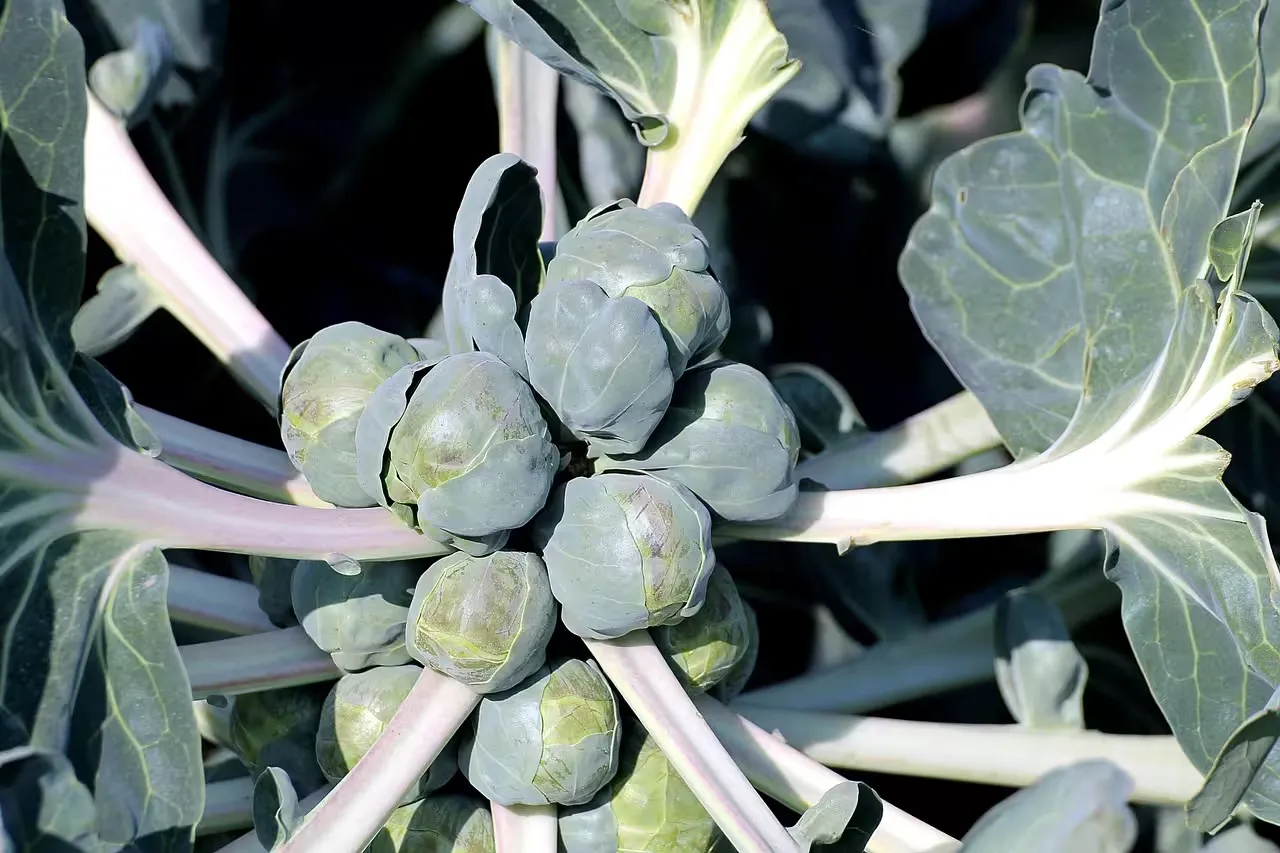
Brussels sprouts are a hardy winter brassica (cabbage family) that form sturdy, leafy stems often around 60–90cm tall. They produce edible mini-cabbage buds along the stem from autumn through winter. Thanks to their cold tolerance, sprouts remain productive into late winter, and frost actually improves their sweetness.
90 cm · Full Sun · Moderate Water
Calibrated to Old Town · last frost ≈ 16 Feb
| Activity | January | February | March | April | May | June | July | August | September | October | November | December |
|---|---|---|---|---|---|---|---|---|---|---|---|---|
| Sow indoors | Yes | No | No | No | No | No | No | No | No | No | No | No |
| Plant out | No | No | Yes | No | No | No | No | No | No | No | No | No |
| Harvest | Yes | No | No | No | No | No | No | No | No | No | Yes | Yes |
Growing guide
Step-by-step instructions for growing Brussels Sprouts
Growing guide for
Change the guide to see different planting timelines and tips.
Grow Brussels sprouts for a harvest from autumn through winter, with sprouts maturing from the bottom of the stalk upwards.
01
Sow Seeds Indoors
2 Jan to 17 JanSow seeds indoors in modules or pots around 2nd January - 17th January. Use a good seed compost and cover with of soil. Keep at for germination, which takes 7-14 days.
- Move seedlings to a bright spot as soon as they emerge, leggy seedlings rarely catch up.
02
Prick Out Seedlings
23 Jan to 30 JanOnce seedlings have their first true leaves, prick them out into individual pots around 23rd January - 30th January. Handle by the leaves to avoid stem damage and plant at the same depth as before.
03
Harden Off Plants
13 Feb to 20 FebGradually acclimatise plants to outdoor conditions over 7-10 days around 13th February - 20th February. Start with a few hours in a sheltered spot and increase exposure each day.
04
Transplant Outdoors
2 Mar to 16 MarPlant seedlings into their final position around 2nd March - 16th March. Space them apart in firm, fertile soil. Firm the soil well around each plant to prevent wind-rock.
05
Install Pest Protection
9 Mar to 16 MarImmediately after transplanting, cover plants with fine mesh netting to protect against cabbage white butterflies and pigeons. Fit brassica collars around the base of each stem to deter cabbage root fly.
06
Feed Plants
23 Mar to 9 Jan every 4 weeksApply a nitrogen-rich fertiliser every 28 days from 23rd March until 9th January. Water it in well to support the heavy leafy growth needed for good sprout formation.
- Switch to a liquid seaweed feed once sprouts start swelling, too much nitrogen at this stage can cause blown sprouts.
07
Harvest Sprouts
10 Nov to 9 JanStart harvesting from the bottom of the stalk upwards around 10th November - 9th January. Pick sprouts when they are firm and about the size of a walnut. Frost improves their flavour, so continue harvesting through winter.
- Remove yellowing lower leaves regularly to improve air flow and reduce the risk of fungal diseases.
Companion plants
Tap a plant to see why it works (or doesn't) with Brussels Sprouts.
Good companions
Plants to avoid
Why companion planting matters
Companion planting can deter pests, improve pollination, and make better use of space. Some plants confuse pests or attract beneficial insects; others improve soil or offer shade to neighbours that need it.
Related plants
Explore similar plants you might like
Brussels Sprouts guides by town
See how Brussels Sprouts timing shifts in other towns with different frost dates.