Fama Deep Blue
Compact plants with rich blue flowers, useful for smaller borders and containers.
Scabiosa spp.
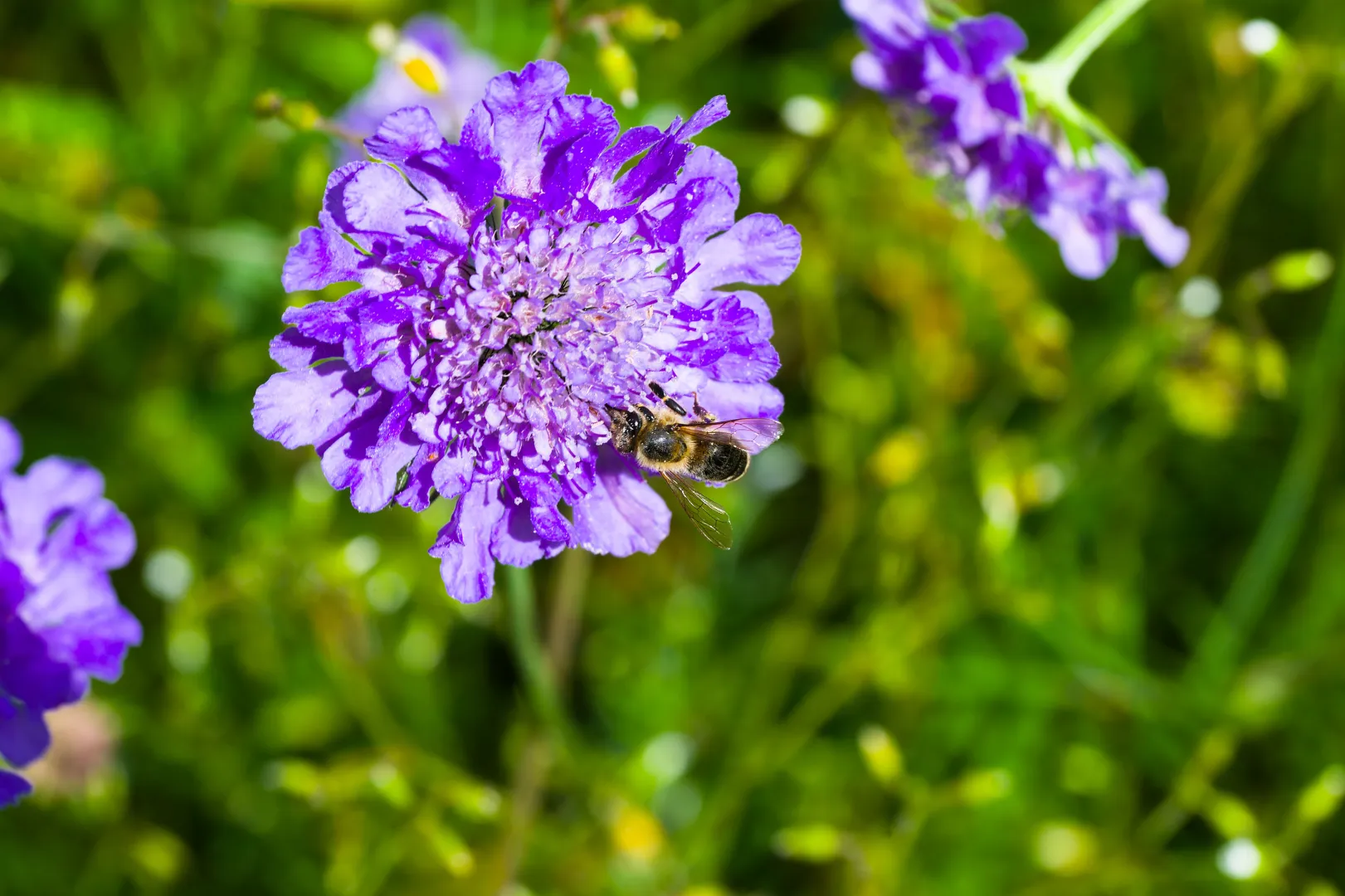
A reliable half-hardy cottage-garden flower for UK borders and cutting. Sow under cover in spring or plant out young plants after the risk of frost, then keep them deadheaded for a long flowering season.
60 cm · Full Sun · Moderate Water
Calibrated to New Grimsby · last frost ≈ 19 Feb
| Activity | January | February | March | April | May | June | July | August | September | October | November | December |
|---|---|---|---|---|---|---|---|---|---|---|---|---|
| Sow indoors | Yes | No | No | No | No | No | No | No | No | No | No | No |
| Plant out | No | No | Yes | No | No | No | No | No | No | No | No | No |
Step-by-step instructions for growing Scabious
01
Sow seeds into modules from 5th January to 29th January, covering them with a light seed sowing depth of . Keep the compost just moist and place the tray somewhere bright and cool for steady germination.
02
When seedlings are large enough to handle, move them on from 31st January to 14th February into small pots. Handle them by the leaves, not the stems, and keep them growing on in good light.
03
Acclimatise the young plants from 5th February to 19th February by putting them outside for longer each day. This stops check when they go into the border and prepares them for cooler UK nights.
04
Plant out from 5th March to 19th March once frosts have passed and the soil has warmed a little. Space plants apart, water them in thoroughly straight away, and protect them from slugs and strong winds while they settle.
05
Start deadheading from 11th April and keep going until 3rd December. Remove fading flowers regularly so the plant puts its energy into more blooms instead of setting seed, and keep the soil evenly moist in dry spells.
Tap a plant to see why it works (or doesn't) with Scabious.
Companion planting can deter pests, improve pollination, and make better use of space. Some plants confuse pests or attract beneficial insects; others improve soil or offer shade to neighbours that need it.
Popular varieties of Scabious to consider
Compact plants with rich blue flowers, useful for smaller borders and containers.
Soft pink blooms on sturdy stems, good for a loose cottage-garden effect.
Dark maroon flowers with a long blooming period and good stems for cutting.
Explore similar plants you might like
See how Scabious timing shifts in other towns with different frost dates.