Mammoth
A tall, leafy dill with good flavour for salads, fish and pickling.
Anethum graveolens
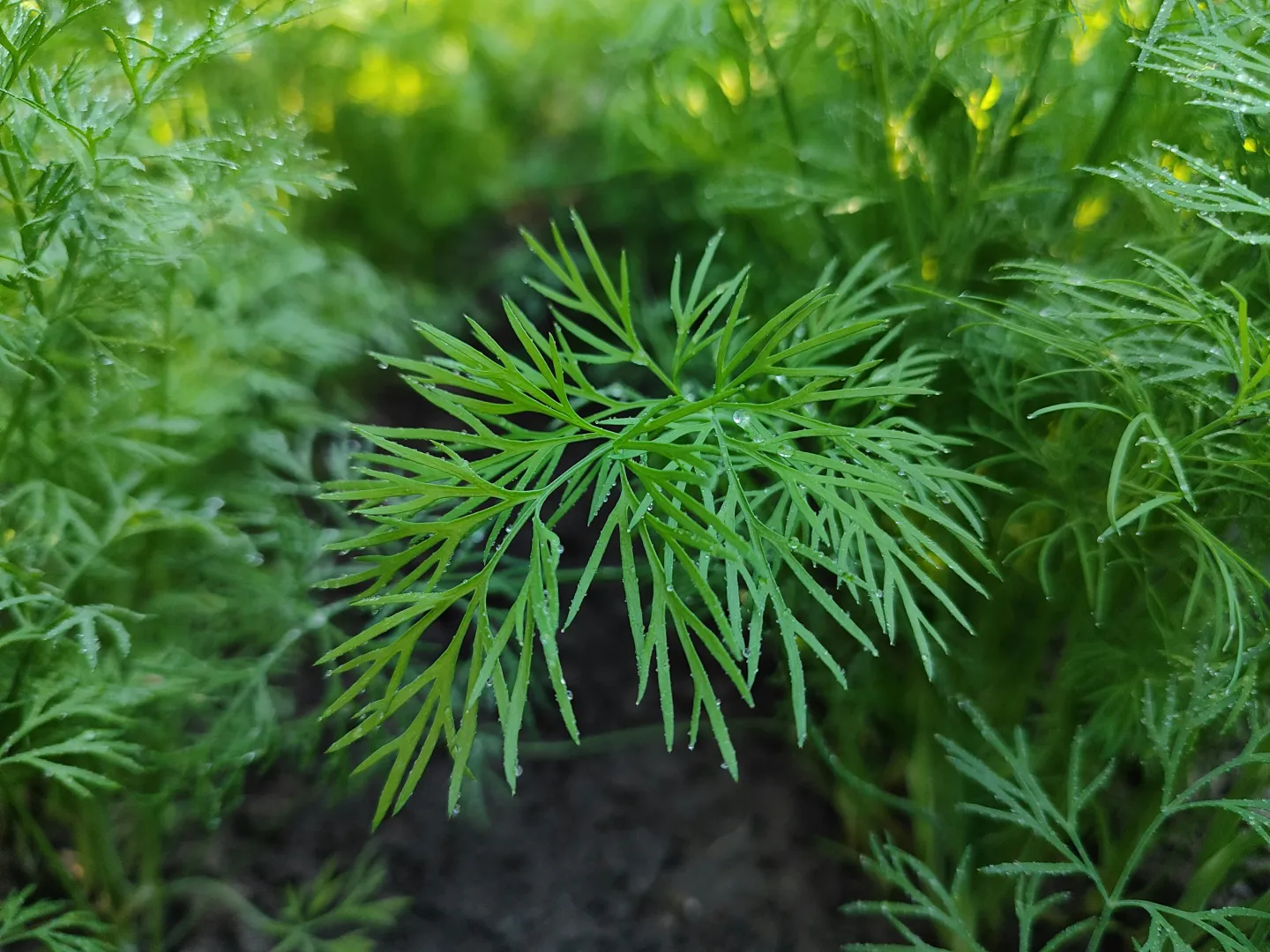
A quick-growing annual herb for light, feathery leaves and seed heads. In the UK it grows best from spring to mid-summer in a sunny, sheltered spot with free-draining soil, and it dislikes being moved once established.
80 cm · Full Sun · Moderate Water
Calibrated to New Grimsby · last frost ≈ 19 Feb
| Activity | January | February | March | April | May | June | July | August | September | October | November | December |
|---|---|---|---|---|---|---|---|---|---|---|---|---|
| Sow | No | No | Yes | Yes | Yes | No | No | No | No | No | No | No |
| Harvest | No | No | No | No | Yes | Yes | Yes | Yes | Yes | Yes | Yes | Yes |
Step-by-step instructions for growing Dill
01
Sow seeds thinly on the surface of fine compost from 5th March to 22nd May and cover with a very light layer of compost only. Keep the compost just moist, as seeds germinate best with light and steady warmth.
02
When seedlings are large enough to handle, thin them so the strongest plants stand apart. If several come up in one spot, snip the extras off at soil level rather than pulling them up.
03
From 27th April to 3rd December, water the roots when the surface starts to dry and keep the soil evenly moist, not sodden. In exposed gardens, use fleece or a cloche early on to help young plants settle.
04
From 11th May to 3rd December, pinch out the growing tips regularly to stop plants rushing into flower too soon. Pick from the top growth often, and remove any flower buds if you want more leaf growth.
05
Start cutting from 25th May and keep picking until 3rd December. Snip small amounts often, taking the soft tips first, and use the leaves fresh for the best flavour.
Tap a plant to see why it works (or doesn't) with Dill.
Companion planting can deter pests, improve pollination, and make better use of space. Some plants confuse pests or attract beneficial insects; others improve soil or offer shade to neighbours that need it.
Popular varieties of Dill to consider
A tall, leafy dill with good flavour for salads, fish and pickling.
A compact, slow-bolting type that suits pots and small gardens.
A reliable, later-flowering cultivar with plenty of foliage.
Explore similar plants you might like
See how Dill timing shifts in other towns with different frost dates.