Avonresister
A dependable modern variety with good resistance to canker and a neat root shape for UK gardens.
Pastinaca sativa
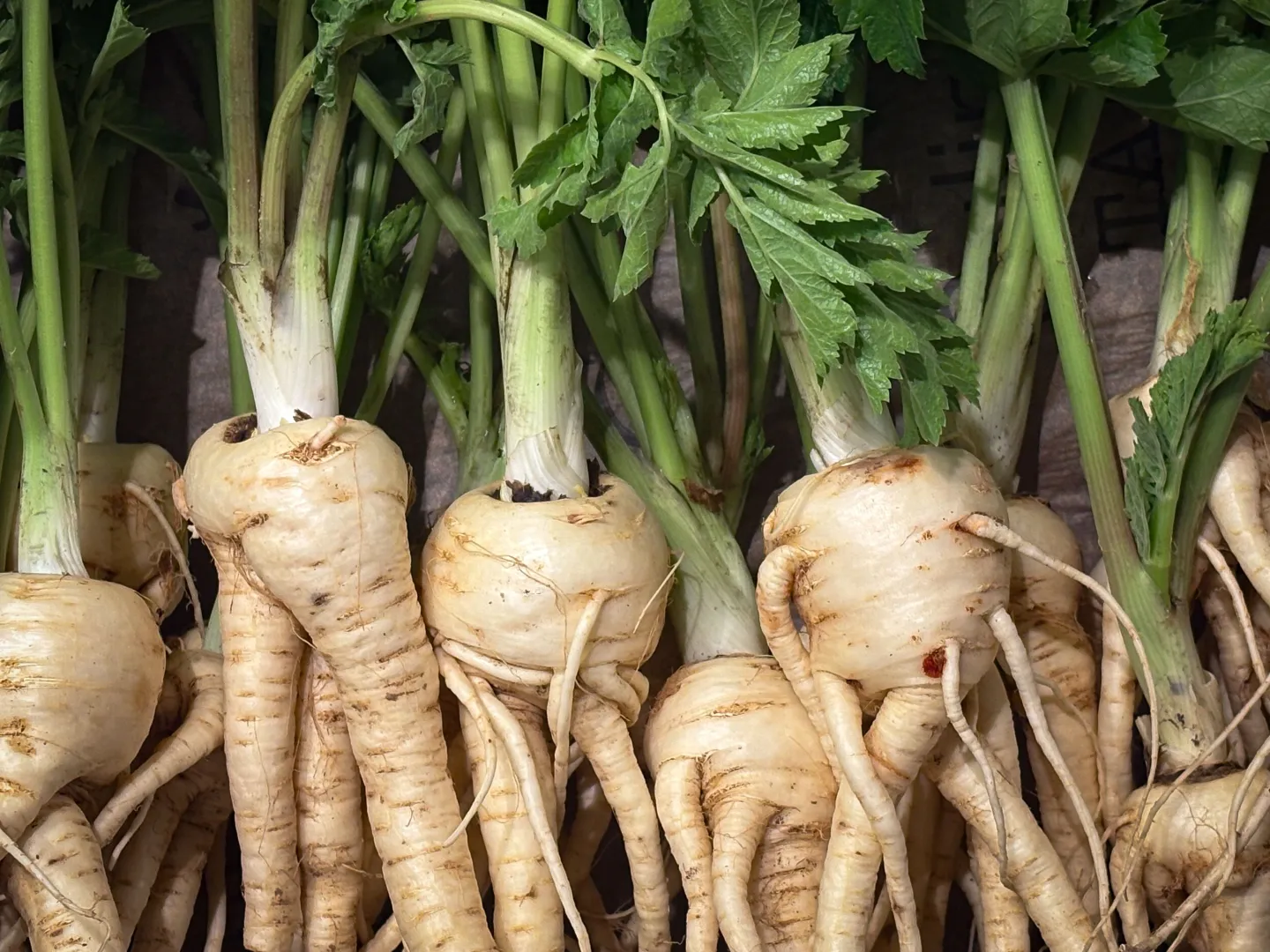
Parsnips need a deep, stone-free soil and do best where the bed has been well dug but not freshly manured. Sow direct, keep the seedbed moist while they germinate, and use fine mesh to keep carrot fly off the row. Roots swell slowly, then can be lifted as needed through the colder part of the year.
60 cm · Full Sun · Moderate Water
Calibrated to Gants Hill · last frost ≈ 19 Apr
| Activity | January | February | March | April | May | June | July | August | September | October | November | December |
|---|---|---|---|---|---|---|---|---|---|---|---|---|
| Sow | No | Yes | Yes | Yes | Yes | No | No | No | No | No | No | No |
| Harvest | Yes | Yes | Yes | No | No | No | No | Yes | Yes | Yes | Yes | Yes |
Step-by-step instructions for growing Parsnip
01
Dig the soil deeply and rake it to a fine tilth around 22nd February - 3rd May. Remove stones and clods, and do not add fresh manure, because it can make the roots fork.
02
Sow seeds thinly in shallow drills around 22nd February - 20th May and cover them with fine soil. Water the row gently after sowing and keep the surface evenly moist while they germinate, as parsnips can be slow to emerge.
03
Put fine insect-proof mesh over the row from 6th April straight after sowing and seal the edges well. Leave it in place as the seedlings come through, because carrot fly can find exposed rows very quickly.
04
Thin seedlings from 11th May - 21st May once they are large enough to handle, leaving the strongest plants at apart. Do it on a damp day if you can, then water the row afterwards so the roots settle cleanly.
05
Lift roots from 4th August once they have reached a usable size, and carry on through 2nd March. Later roots are sweeter after cold weather, and many can stay in the ground if the soil drains freely and is not waterlogged.
Tap a plant to see why it works (or doesn't) with Parsnip.
Companion planting can deter pests, improve pollination, and make better use of space. Some plants confuse pests or attract beneficial insects; others improve soil or offer shade to neighbours that need it.
Popular varieties of Parsnip to consider
A dependable modern variety with good resistance to canker and a neat root shape for UK gardens.
A traditional variety that crops well in ordinary garden soils and stores reasonably well in the ground.
A classic heritage type with long roots and good flavour when grown in deep, stone-free soil.
A strong, uniform F1 variety that gives heavy roots and stands well in the soil for late harvesting.
Explore similar plants you might like
See how Parsnip timing shifts in other towns with different frost dates.