Fine Leaved
A neat, small-leaved form with a mild flavour and tidy growth for pots or edging.
Allium schoenoprasum
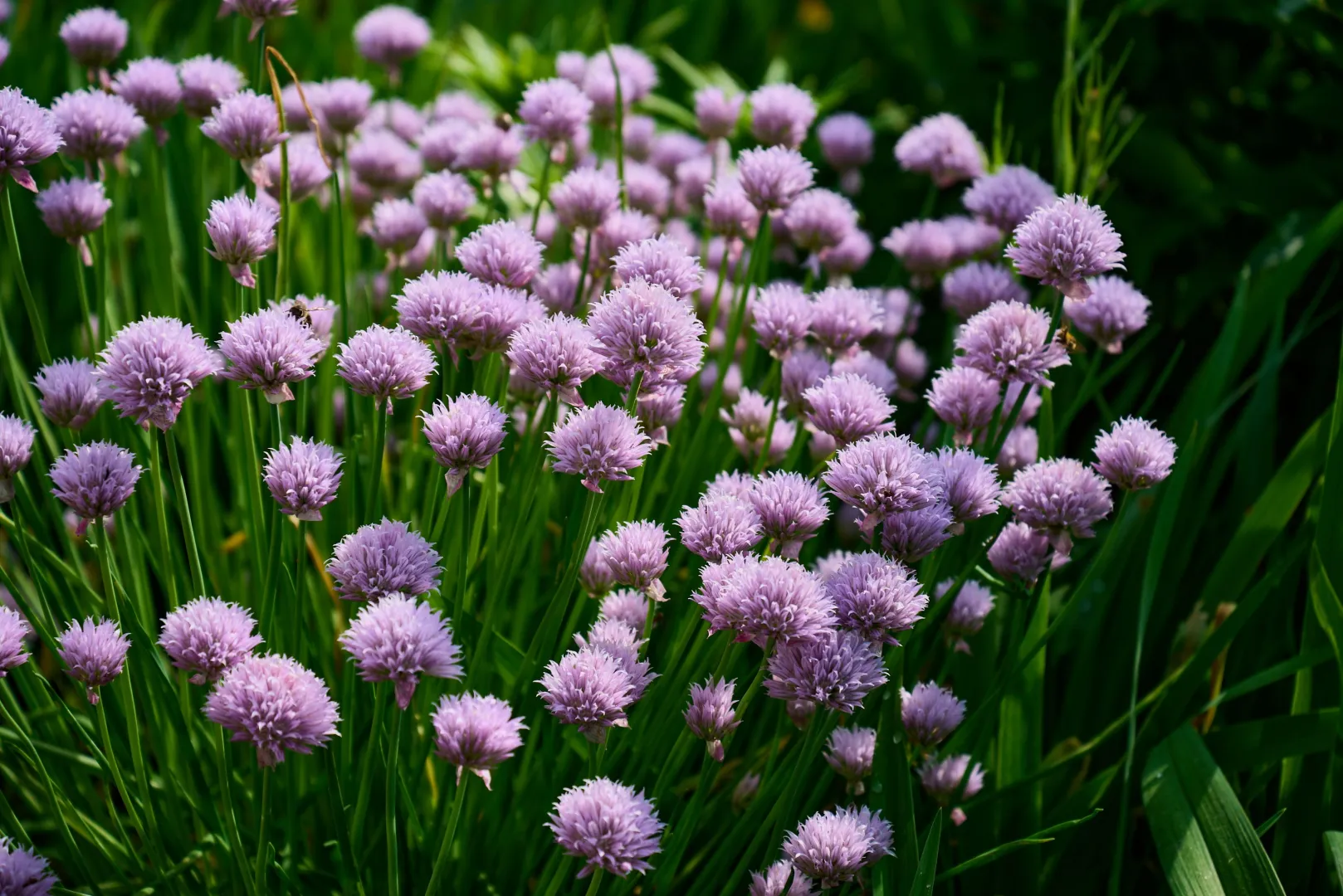
A hardy perennial herb for pots or the open ground. It grows best in moist but free-draining soil in sun or light shade, and regular cutting keeps the clumps productive.
30 cm · Full Sun · Moderate Water
Calibrated to Gaitsgill · last frost ≈ 11 May
| Activity | January | February | March | April | May | June | July | August | September | October | November | December |
|---|---|---|---|---|---|---|---|---|---|---|---|---|
| Sow indoors | No | No | Yes | Yes | No | No | No | No | No | No | No | No |
| Plant out | No | No | No | No | Yes | Yes | No | No | No | No | No | No |
Step-by-step instructions for growing Chives
01
Sow seeds thinly on the surface of moist seed compost from 30th March to 20th April. Cover very lightly with fine compost, then keep the tray in bright light at until germination.
02
When seedlings are large enough to handle, from 30th April to 14th May, prick them out into small pots. Keep the roots undisturbed as much as you can and water them in gently.
03
Harden plants off first, then set them in their final position from 25th May to 11th June. Space them apart, water in thoroughly straight away, and keep newly planted clumps watered while they settle.
04
From 25th June to 10th October, snip leaves often to keep plants leafy and stop them throwing up flowers too early. Cut just above the base of the leaves, and remove any flower stalks as they appear.
05
From 16th June to 10th October, water whenever the compost starts to dry and give a light liquid feed now and then if plants are in pots. Keep the soil evenly moist, not soggy, for steady leaf growth.
Tap a plant to see why it works (or doesn't) with Chives.
Companion planting can deter pests, improve pollination, and make better use of space. Some plants confuse pests or attract beneficial insects; others improve soil or offer shade to neighbours that need it.
Popular varieties of Chives to consider
A neat, small-leaved form with a mild flavour and tidy growth for pots or edging.
A strong, productive chive with large leaves and good regrowth after cutting.
A reliable, broad-leaved type that stands up well to repeated trimming.
Explore similar plants you might like