Victoria
A reliable, heavy-cropping dessert plum with large red-purple fruit and yellow flesh.
Prunus domestica
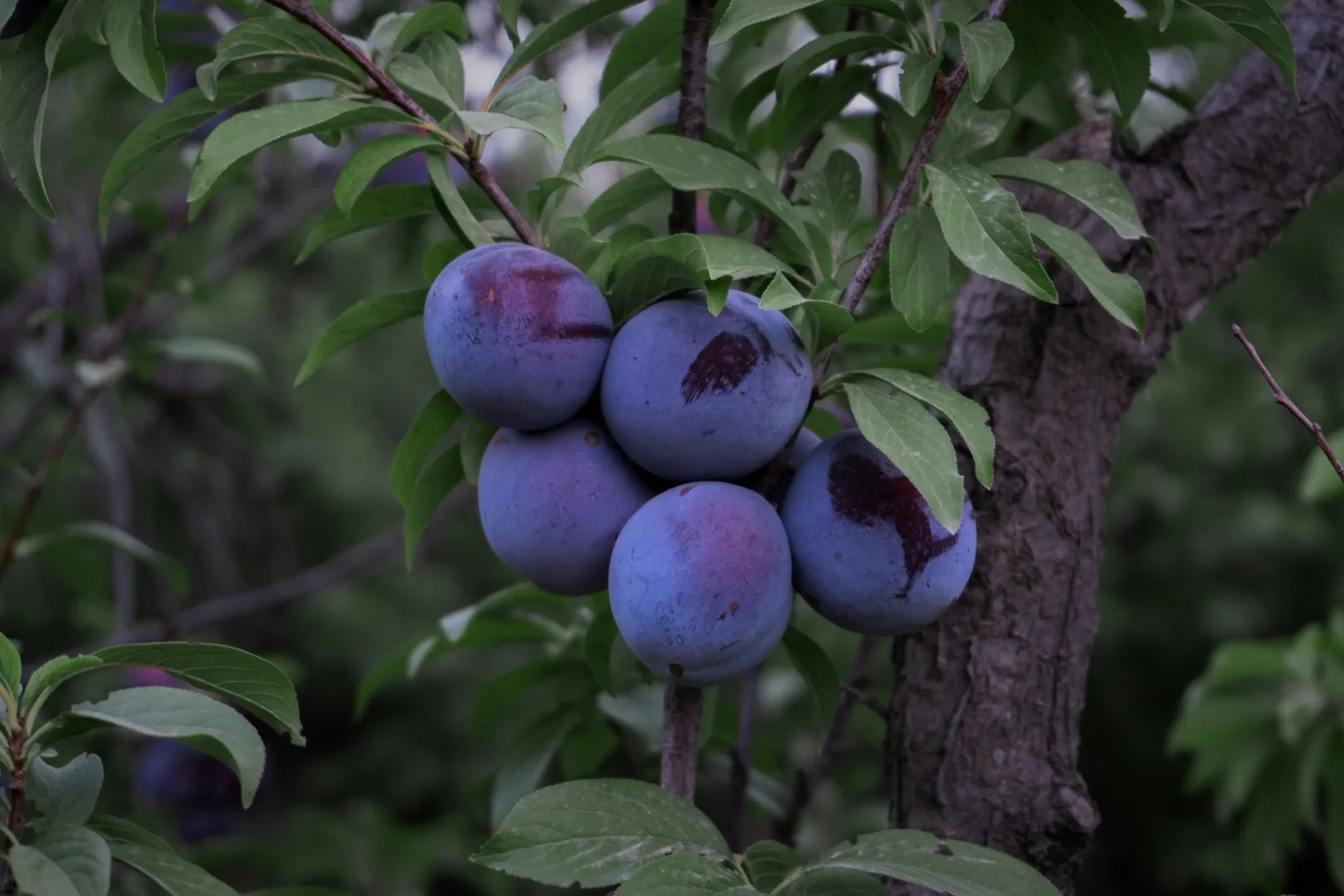
Grow plum trees in a sunny, sheltered spot with free-draining soil. Bare-root trees are best planted while dormant, then watered well through the first two summers and pruned only in summer to reduce the risk of silver leaf disease.
400 cm · Full Sun · Moderate Water
Calibrated to Fyvie · last frost ≈ 27 May
| Activity | January | February | March | April | May | June | July | August | September | October | November | December |
|---|---|---|---|---|---|---|---|---|---|---|---|---|
| Plant out | Yes | Yes | No | No | No | No | No | No | No | Yes | Yes | Yes |
| Harvest | No | No | No | No | No | No | No | Yes | Yes | Yes | No | No |
Step-by-step instructions for growing Plum
01
Plant a bare-root tree while it is dormant, around 9th October - 16th February. Set it at the same depth it was grown before, stake it firmly, and keep a wide weed-free circle around the trunk. Water it in thoroughly straight after planting.
02
Water deeply from 27th May through 19th September, especially in dry spells. Keep up regular watering for the first two summers, because young trees crop poorly if they dry out. Aim for a good soak every 10 days when rain is lacking.
03
After the natural drop, from 11th July - 26th July, thin congested fruitlets so the remaining plums have room to swell. Leave roughly one fruit every on the branch and remove damaged or badly placed fruit first.
04
Pick fruit from 25th August to 4th October when it colours well and comes away with a gentle twist. Harvest over several picks as different fruits ripen, and handle them carefully because ripe plums bruise easily.
05
Prune lightly from 26th July to 25th August in dry weather only. Remove damaged, crossing or overcrowded growth, and avoid winter pruning because stone fruit is prone to silver leaf disease.
Tap a plant to see why it works (or doesn't) with Plum.
Companion planting can deter pests, improve pollination, and make better use of space. Some plants confuse pests or attract beneficial insects; others improve soil or offer shade to neighbours that need it.
Popular varieties of Plum to consider
A reliable, heavy-cropping dessert plum with large red-purple fruit and yellow flesh.
An early plum that crops well in many UK gardens and is useful where summers are short.
A popular late-season plum with good flavour and a steady crop.
A sweet, early plum with good flavour and a fairly reliable crop in the UK.
Explore similar plants you might like