Miss Jessopp's Upright
A classic upright form with strong flavour and good winter hardiness.
Salvia rosmarinus
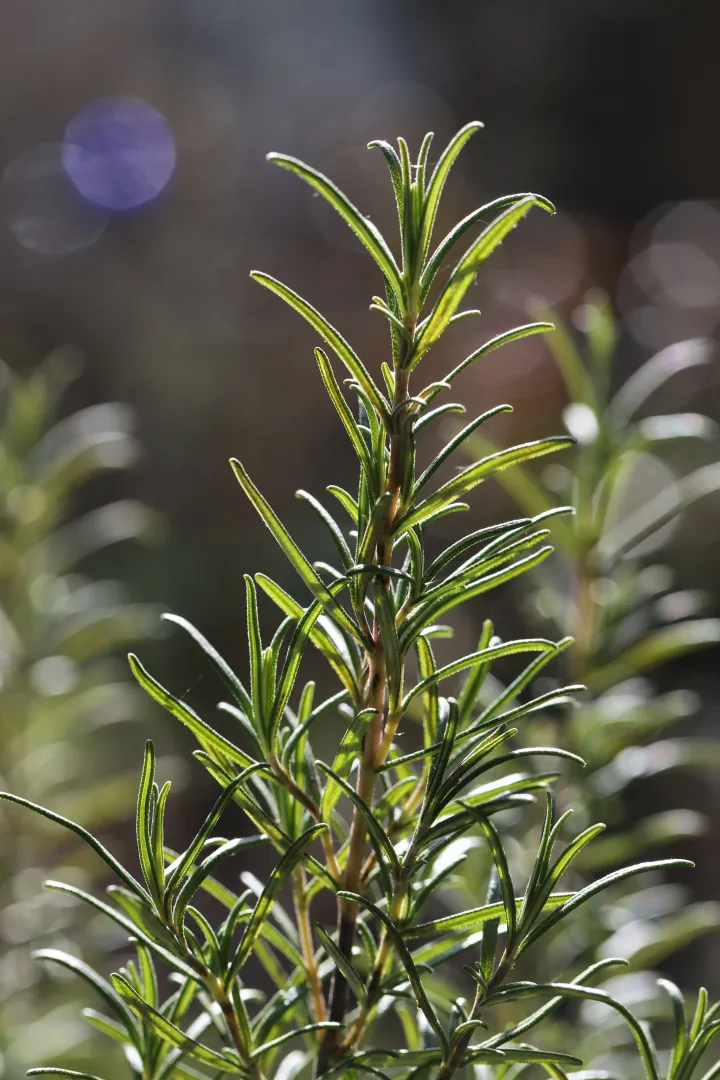
A woody, evergreen herb for a warm, sunny spot in free-draining soil or a pot. It grows well in most UK gardens if the roots stay on the dry side and winter wet is kept off the plant.
120 cm · Full Sun · Low Water
Calibrated to Fortis Green · last frost ≈ 20 Apr
| Activity | January | February | March | April | May | June | July | August | September | October | November | December |
|---|---|---|---|---|---|---|---|---|---|---|---|---|
| Sow indoors | No | No | Yes | Yes | Yes | Yes | No | No | No | No | No | No |
| Plant out | No | No | No | No | Yes | Yes | No | Yes | Yes | No | No | No |
| Harvest | No | No | No | No | No | No | No | No | Yes | Yes | Yes | No |
Step-by-step instructions for growing Rosemary
01
Take non-flowering shoots and trim them just below a leaf joint. Insert them into free-draining compost around 21st March - 20th June, and keep them just moist, not wet.
02
Once roots fill the pot, move each cutting into its own container from 26th May. Use a gritty mix and handle the stems gently so the young roots are not damaged.
03
Set young plants outside for short periods from 20th July, then leave them out longer over about 10 days. Keep them sheltered from cold wind and bring them in if a late frost is forecast.
04
Plant into well-drained soil or a larger pot from 4th August. Water in thoroughly at once, then leave the compost to dry slightly before watering again.
05
Pinch out the soft tips from 19th August to keep plants bushy and stop them becoming leggy. Water only when the compost has dried a little, and avoid feeding heavily because that makes soft growth.
06
Pick sprigs regularly from 18th September once plants are well established. Take small amounts at a time, and avoid cutting back into old bare wood as it may not reshoot well.
Tap a plant to see why it works (or doesn't) with Rosemary.
Companion planting can deter pests, improve pollination, and make better use of space. Some plants confuse pests or attract beneficial insects; others improve soil or offer shade to neighbours that need it.
Popular varieties of Rosemary to consider
A classic upright form with strong flavour and good winter hardiness.
A hardy, upright type that copes well in exposed gardens and cold conditions.
A trailing form suited to pots, raised edges, and cascading over walls.
An upright cultivar with strong growth and pale blue flowers.
Explore similar plants you might like
See how Rosemary timing shifts in other towns with different frost dates.