Monarch
A reliable selection with smooth, round roots and good standing power in the ground.
Apium graveolens var. rapaceum
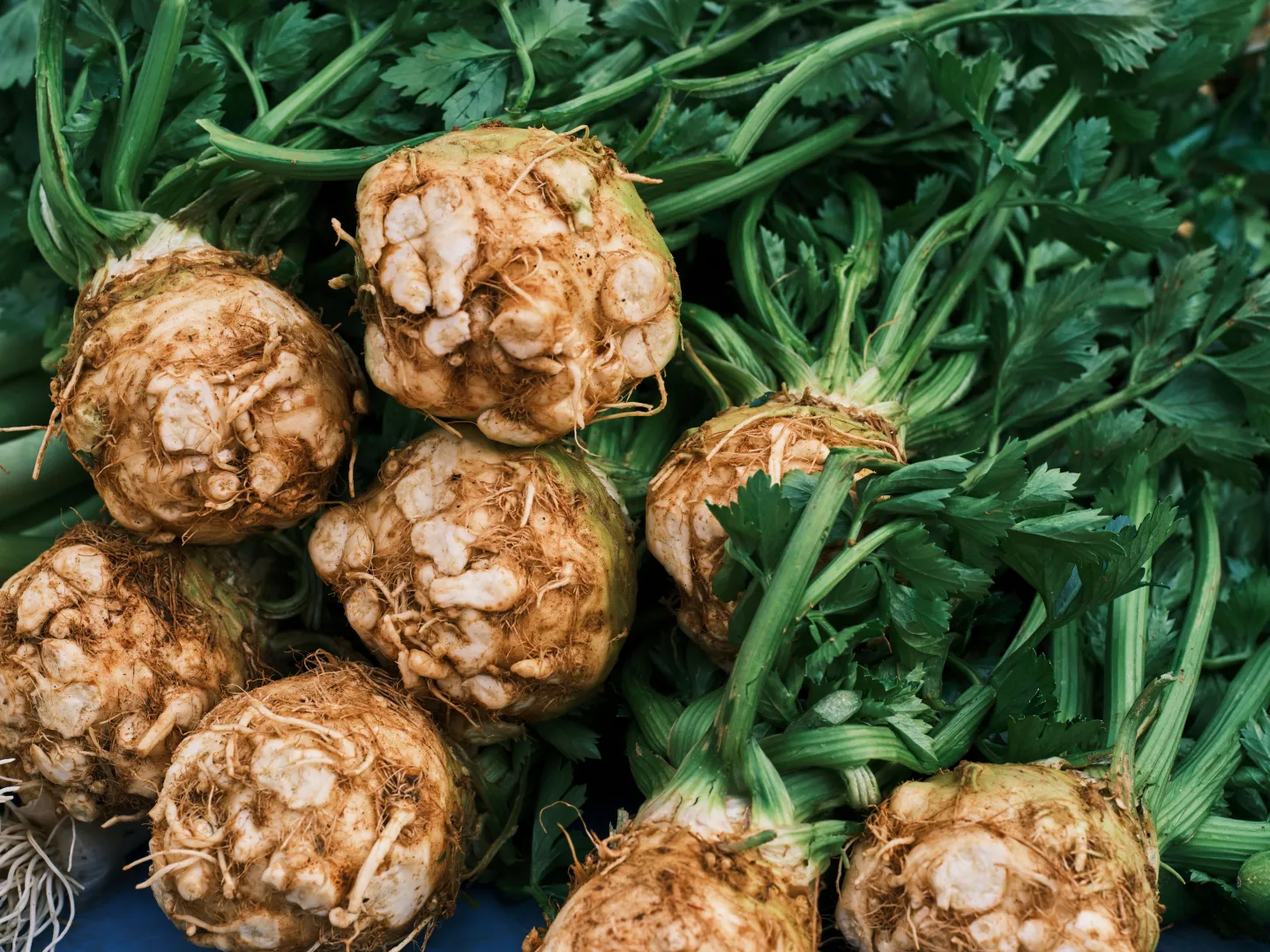
A slow-growing root crop for deep, fertile, moisture-retentive soil. In the UK, sow directly outdoors in spring, keep plants evenly watered, and leave the roots in the ground for later lifting through winter where the soil stays workable.
40 cm · Full Sun · High Water
Calibrated to Forsinard · last frost ≈ 9 Jun
| Activity | January | February | March | April | May | June | July | August | September | October | November | December |
|---|---|---|---|---|---|---|---|---|---|---|---|---|
| Sow | No | No | No | No | Yes | Yes | No | No | No | No | No | No |
| Harvest | No | No | No | No | No | No | No | Yes | Yes | Yes | Yes | Yes |
Step-by-step instructions for growing Celeriac
01
Work the soil deeply and break it down to a fine tilth around 12th May - 9th June. Remove stones and any hard lumps, then mix in well-rotted compost. Avoid fresh manure, because it makes the roots fork.
02
Sow seeds thinly in shallow drills around 26th May - 9th June, then cover lightly and water the row well. Keep the soil moist while they germinate, and sow only when it has warmed enough for steady growth.
03
Fit insect-proof mesh over the row straight after sowing, from 9th June. Seal the edges well so adult flies cannot get in and lay eggs near the roots.
04
When seedlings are large enough to handle, from 23rd June to 30th June, thin them carefully to one plant every . Water the row first so you disturb the roots as little as possible.
05
Lift roots from 22nd August and keep harvesting through 1st December. Leave sound roots in the ground over winter if the soil drains well, then lift them as needed before they start to run down.
Tap a plant to see why it works (or doesn't) with Celeriac.
Companion planting can deter pests, improve pollination, and make better use of space. Some plants confuse pests or attract beneficial insects; others improve soil or offer shade to neighbours that need it.
Popular varieties of Celeriac to consider
A reliable selection with smooth, round roots and good standing power in the ground.
Produces firm roots with a neat shape and steady performance in the vegetable patch.
A long-established type that gives large, usable roots and is widely grown in Britain.
Explore similar plants you might like